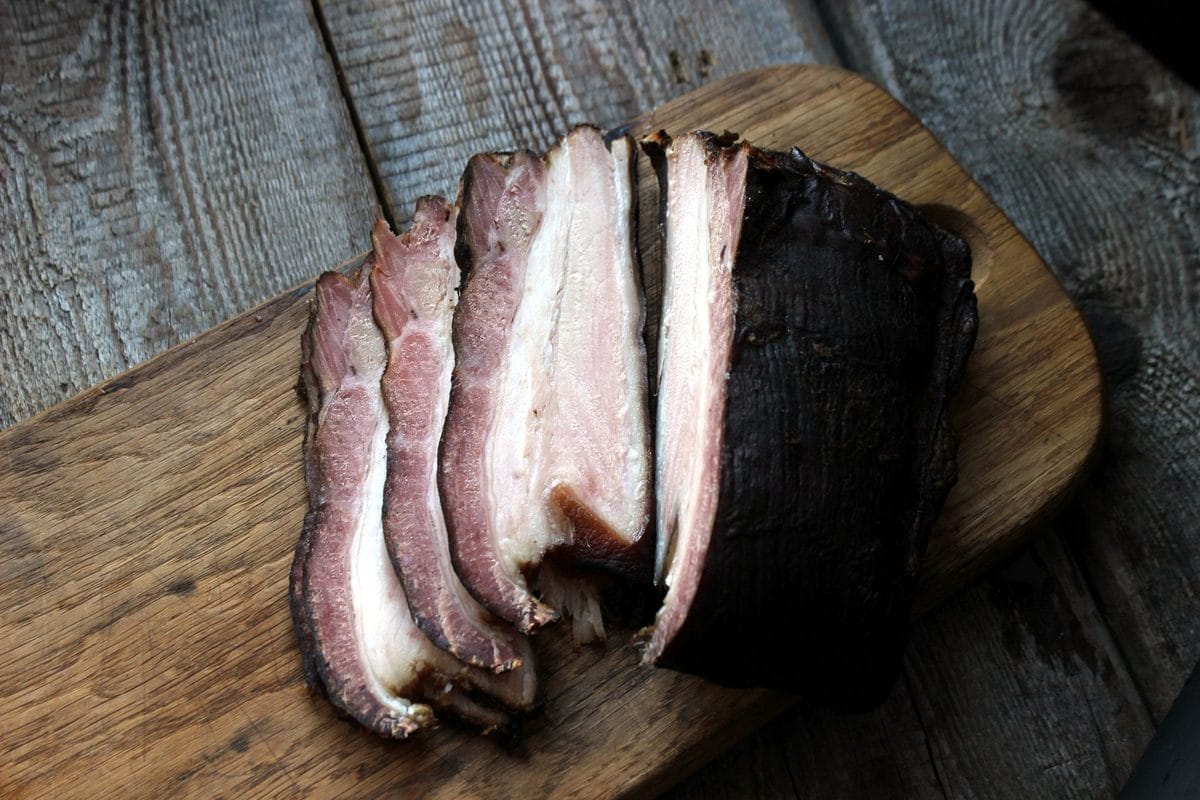
Saturday afternoon, the smoker has been running for an hour, and the brisket you planned is still hours from ready. You need something that finishes before the guests get restless. A tri-tip sits in that gap. It is a small triangular cut from the bottom sirloin, sold as a single piece that fits on one cutting board, and it cooks faster than almost anything else worth smoking.
Most home cooks know tri-tip from the grill, where it earns its reputation as a weeknight steak with a backyard twist. Smoked, it becomes something more forgiving and more deeply flavored, but it behaves differently enough that the habits you bring from brisket can work against you. Here is how to handle it, and where it does not belong.
What makes this cut different
The tri-tip is a lean-to-moderate muscle with a thick fat cap on one side and a thin silverskin membrane running through the rest. Its grain changes direction where the triangle folds, and that is the single most important thing to know before you slice. Because the muscle lacks the heavy connective tissue of a chuck roast or the dense fat of a brisket flat, it does not need a long render. It needs enough time for the smoke to penetrate and for the outer layer to form a bark that tastes like more than salt.
That also means a tri-tip has very little margin. A brisket can sit wrapped and forgiven for hours. A tri-tip that runs a few minutes past its window turns from juicy to chewy in a way no sauce will fix.
Trim, season, and let the rub do its work
Start by trimming the silverskin on the lean side. It shrinks when heated and pulls the muscle into a curl. Leave the fat cap, but score it lightly in a crosshatch so the rub reaches under it and the fat renders into the bark. A thick cap can overpower a smaller cut, so trim it to a neat layer that will still baste the meat as it melts.
- Trim the silverskin so the lean side lies flat on the board.
- Score the fat cap in a light crosshatch, not down to the meat.
- Season every surface, including the thin edges that burn first.
- Leave it uncovered in the refrigerator while the smoker comes up to heat.
A simple rub of coarse salt, black pepper, garlic powder and a little brown sugar works well. The salt does the real work. Apply it generously and let the meat sit uncovered for a few hours, or overnight if your schedule allows. The surface dries, the salt pulls moisture inward and then redistributes it, and the bark forms faster once the smoker is running. Skip wet marinades here. They steam the surface and fight the crust you came for.
Fire, wood, and keeping the lid closed
Tri-tip likes a medium, steady heat and a light wood. Oak and hickory both work, and a little cherry or apple softens the smoke if hickory feels too sharp for beef. Use indirect heat. Set the cut fat side up over the cooler part of the grate, and resist the urge to lift the lid every few minutes to check. Each time it opens, heat escapes and the bark has to start over.
Here is the trap many cooks fall into. They treat tri-tip like brisket and cook it low and slow for half the day, which dries out a cut that never needed that much time. The better approach is a moderate fire and a probe thermometer you trust. Pull the meat when the thickest part reads done for your taste, not when the clock says so. Tri-tip is best served medium to medium-rare, and it keeps climbing after it leaves the smoker.
Keep the fire honest too. A smoker that surges and then dies will leave you with a grayish band just under the bark. Feed it small amounts of wood often instead of a big load at once, and watch the color of the smoke. Thin blue smoke is what you want. Thick white smoke means the wood is smoldering badly, and the meat will taste bitter no matter how good the rub was.
Pull early, then rest it properly
Take it off when it is a few degrees below your target. The carryover heat finishes the job during the rest. Tent it loosely with foil and leave it alone until the juices settle, which usually takes longer than you expect. Cutting too early lets the juices run onto the board, and the meat left on the plate tastes dry even though the thermometer said it was perfect.
Slicing against a moving target
Look at the cut before the knife touches it. You will see the grain running one way along the long side and bending near the point. Slice across the grain in each section, which means changing your angle as you move toward the tip. Cut thin, about the width of a pencil, so each bite tears less than it chews.
- Slice the thicker section first, while the knife still moves cleanly through the bark.
- Turn the blade with the grain change near the point, and check it every few cuts.
- Set the thin end aside for whoever likes the chewier, crispier pieces.
Sides that do not steal the show
A smoked meat this assertive wants sides that cut through the richness rather than compete with the bark. A sharp slaw with a vinegar dressing does that job well, and so does a bowl of pickled red onions that you can make the morning before. Grilled corn with lime and chili powder keeps the table lively without asking anyone to wait for a second plate. Skip the heavy cheese casseroles on this particular afternoon. They work beautifully with brisket, but next to a tri-tip they make the whole table feel sleepy.
Serve it on a board with the juices spooned back over the slices. A horseradish cream, a pile of sharp raw onion and a soft roll turn the whole thing into a sandwich that disappears faster than the platter. Put the cream on the bread rather than the meat, so the bark stays crisp and the bread does not turn to paste.
Leftovers worth planning for
Cook a little more than you need, because tri-tip makes the best leftovers in the smoker repertoire. Wrap the unsliced remainder tightly and refrigerate it within an hour of coming off the smoker. Slice it cold, then warm it gently in a skillet with a splash of its own juices. Tacos with pickled onion, a salad with crumbled blue cheese, or a cold sandwich on a hard roll all taste better the next day than most people expect. Fat that rendered during the cook sets up nicely in the fridge and adds a savory layer to anything you build.
Where tri-tip belongs in your rotation
Tri-tip earns a regular spot because it fills a gap that brisket and ribs cannot. It cooks within one afternoon, it feeds a small table without a crowd, and it holds up well as leftovers in tacos, salads or a cold sandwich the next day. Many cooks treat it as a steak substitute. It is more than that. The smoke gives it a depth a grilled steak cannot match, and the bark gives you the crust most people chase all year.
The first one you cook will probably come out a little too done.
Not every tri-tip deserves the smoker. A very lean, thin piece from a poorly butchered sirloin will dry out no matter how carefully you manage the fire, and in that case a hot sear on the grill serves you better. That is a fair trade. Check the cut at the butcher counter before you commit, and ask whether the fat cap is even on both ends.
We recommend buying a whole, well-trimmed piece with an even fat cap. A pre-cut slab from the case is a different product, and it will not give you the same bark or the same clean slice.
The last piece, the one from the thin end, usually disappears first in our kitchen. Somebody always reaches for it standing at the counter, still warm and a little crisp at the edges, and asks what went on the rub. That question is the reason to smoke tri-tip at all.