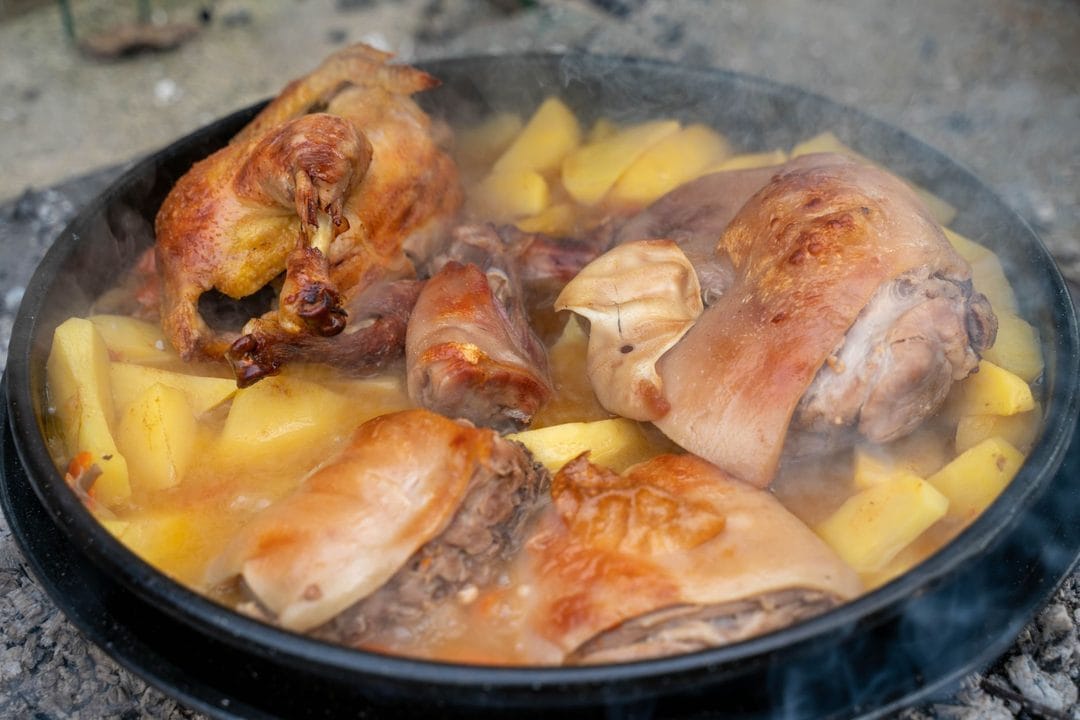
Why Pork Shoulder Belongs in the Oven in Late October
Late October is when the oven starts earning its keep again. The air drops into the 40s and 50s Fahrenheit across much of the country, and a heavy pot that simmers for four hours fills the house with a smell that makes the evening feel planned. Pork shoulder is the cut I reach for first in this stretch of the year. It costs far less per serving than most roasts, it forgives timing mistakes, and the connective tissue that makes it tough when you rush it turns silky when you give it hours at low heat. This recipe pairs it with apple cider, which suits the season and gives the braising liquid enough natural sugar to caramelize at the edges without tasting like dessert. Butternut squash goes in for the final hour so it keeps its shape and soaks up the sauce instead of dissolving into it. The whole thing lives in one Dutch oven, so cleanup is one pot and one lid.
The dish is also forgiving about the parts that trip up beginners. You do not need a meat thermometer to decide when it is done, although a probe makes the process less stressful. You do not need a special cider, although unfiltered apple cider gives a deeper, slightly tart flavor than the clear kind. You do need to sear the meat properly, because the browned crust is where a large share of the flavor comes from. And you need to leave it alone for most of the cook time, which is the hardest part for anyone who likes to check on things every twenty minutes. Plan on about five hours from the moment you start searing to the moment you slice, including a rest. The active work is maybe forty minutes.
Ingredients for Six Servings
- 4 lb (1.8 kg) boneless pork shoulder, trimmed of hard fat but with a quarter-inch cap left on
- 1 tablespoon Diamond Crystal kosher salt (or 1 3/4 teaspoons Morton kosher), plus more for the onions
- 2 teaspoons ground black pepper
- 1 tablespoon smoked paprika
- 2 tablespoons neutral oil, such as canola or grapeseed
- 1 large yellow onion, peeled and cut into half-inch slices
- 4 garlic cloves, smashed and peeled
- 2 cups (475 ml) unfiltered apple cider
- 1 cup (240 ml) low-sodium chicken stock
- 2 tablespoons apple cider vinegar
- 4 sprigs fresh thyme and 6 fresh sage leaves
- 2 bay leaves
- 1 cup frozen pearl onions, thawed (about 6 oz)
- 2 lb (900 g) butternut squash, peeled, seeded, and cut into 1 1/2-inch cubes, about 4 cups
- Optional: 1 tablespoon cornstarch mixed with 2 tablespoons cold water, for thickening the sauce
Buy the pork shoulder bone-in or boneless, though boneless is easier to slice and portion after the braise. A 4-pound piece is a good size for a 6-quart Dutch oven, because the meat should sit in the liquid without crowding the squash. Unfiltered cider has sediment and a cloudier look, and it is the single ingredient that most changes the flavor of the sauce. If you can only find clear cider, it still works, but add a teaspoon of cider vinegar more to bring back the tang. Use low-sodium stock because the reduction concentrates salt, and you do not want to discover at the end that the sauce tastes like a pretzel. Fresh herbs matter here more than dried, since dried sage can turn dusty over four hours in the oven.
Step-by-Step: Season, Sear, Braise, Finish
- Season the pork. Pat the shoulder dry with paper towels. Mix the salt, pepper, and paprika, then rub it over every side. If you have time, leave it uncovered in the refrigerator for 12 to 24 hours; if not, let it sit on the counter for 30 minutes while the oven heats.
- Preheat the oven to 300°F (150°C) with the rack in the center position. A lower temperature keeps the meat moist while the collagen slowly converts to gelatin.
- Sear the meat. Heat the oil in the Dutch oven over medium-high until it shimmers. Place the shoulder fat side down and leave it alone for 8 to 10 minutes, until a deep brown crust forms and the pork releases easily from the pot. Turn and brown the remaining sides, about 15 minutes total. Move the pork to a plate.
- Cook the onions. Lower the heat to medium and add the sliced onion with a generous pinch of salt. Cook for 6 to 8 minutes, scraping the bottom, until the edges turn golden. Add the garlic and cook for one minute more.
- Deglaze and build the liquid. Pour in the cider and scrape up every browned bit from the bottom. Let it simmer for 3 minutes, then add the stock, vinegar, thyme, sage, and bay leaves.
- Braise for three hours. Return the pork to the pot. The liquid should come about halfway up the sides of the meat, so the top stays exposed and browns slightly. Bring everything to a simmer on the stovetop, cover with the lid, and transfer to the oven for 3 hours.
- Add the squash and pearl onions. Remove the pot from the oven. Scatter the pearl onions and squash around the pork, pressing them into the liquid. Cover and return to the oven for 45 to 60 minutes, until the squash is fork-tender and the pork pulls apart with a fork.
- Rest and reduce. Move the pork to a cutting board and let it rest for 20 minutes under loose foil. Skim the excess fat from the surface of the sauce with a spoon. If the liquid looks thin, simmer it on the stovetop for 8 to 10 minutes. For a glossier sauce, whisk in the cornstarch slurry and simmer for one minute more.
- Serve. Slice or shred the pork against the grain, spoon the squash and pearl onions around it, and pour the sauce over everything. Discard the bay leaves and the thyme stems before serving.
The timing above assumes a shoulder close to 4 pounds, which usually means about 4 hours in the oven from start to finish. A longer, thinner roast may finish in closer to three and a half hours, and a rounder one may need the full four and a half. This is why the recipe relies on texture rather than the clock. Start checking at the three-hour mark after you add the squash, because overcooked squash turns to mush in the sauce. If you want the squash firmer, pull it out at 40 minutes and let the pork finish alone.
Checking Doneness Without Guessing
There are two different temperatures worth knowing for pork, and they answer different questions. The first is food safety. The USDA Food Safety and Inspection Service lists 145°F (63°C) as the safe minimum internal temperature for pork steaks, chops, and roasts, followed by a rest of at least three minutes. This braise goes far past that number, so food safety is never the concern here. The second is texture. Pork shoulder holds a large amount of collagen, and that collagen only breaks down into a silky, shreddable texture at much higher temperatures. In practice, the meat is ready to pull when a probe slides into the thickest part with almost no resistance, usually somewhere between 195°F and 205°F (90°C to 96°C). If you do not own a probe, pinch a piece of the meat with two forks. If it comes apart in strands without much effort, it is done.
The squash gives its own signal. It should be tender enough that a paring knife slides through the largest cube with no pressure, but it should still hold its shape when you lift it with a spoon. Pearl onions soften quickly, so they are done as soon as the squash is. Do not chase a perfect color on the squash, since it will pick up some orange and a little brown from the sauce. The sauce itself should coat the back of a spoon when it is ready. If it runs off like water, keep reducing it on the stovetop, watching carefully so it does not catch.
Serving, Storage, and Reheating
This dish works well with anything that can soak up the sauce. Mashed potatoes are the obvious choice, but I also like it over wide egg noodles or a pan of crusty bread that you can tear and dip. A green salad with a sharp mustard vinaigrette cuts through the richness, and a bowl of quick-pickled red onions adds the acid the pork can use. Leftover braise keeps well because the flavor deepens overnight. Store the pork and sauce together in an airtight container in the refrigerator for up to four days. Reheat it gently in a covered pot over low heat with a splash of stock, stirring occasionally, until it is hot all the way through to 165°F (74°C). The sauce will set into a slightly gelatinous texture when cold, which is normal and a sign that the collagen did its job.
For freezing, portion the shredded pork and sauce into freezer bags, squeeze out the air, and lay them flat. They keep for up to three months with good flavor, though the squash becomes soft after thawing and is better eaten fresh. If you plan to freeze, leave the squash out and add a fresh batch when you reheat. Thaw the bags overnight in the refrigerator rather than on the counter. Reheat from thawed in a saucepan with a little liquid until steaming.
Common Mistakes That Make the Braise Taste Flat
- Skipping the sear. A pale, unbrowned shoulder makes a sauce that tastes like boiled pork. Take the full 20 minutes to get a dark crust on every side.
- Crowding the pot. If you try to brown the meat with the onions already in the pot, the moisture from the vegetables steams the pork instead of browning it.
- Drowning the meat. Liquid that covers the shoulder completely washes out the crust. Halfway up the sides is enough, because the lid traps steam and the meat cooks in the vapor as well.
- Adding squash too early. Squash added at the start of the braise turns to purée and clouds the sauce. Wait until the last hour.
- Serving the sauce too thin. A few minutes of reduction on the stovetop changes the texture dramatically. Give the sauce the time it needs before you pour.
The fix for most of these problems is patience at the right moment. Sear slowly, let the onions take their time, and resist lifting the lid during the long oven stage. Every time the lid comes off, the pot loses heat and steam, and the braise takes longer to recover. Once you have made this recipe once, you will know the rhythm of your own oven and the particular weight of your own shoulder. From there, swap the cider for dry hard cider, trade the squash for parsnips and carrots, or add a spoonful of Dijon to the sauce for a sharper finish. The method stays the same, and it will carry you through the rest of the season.