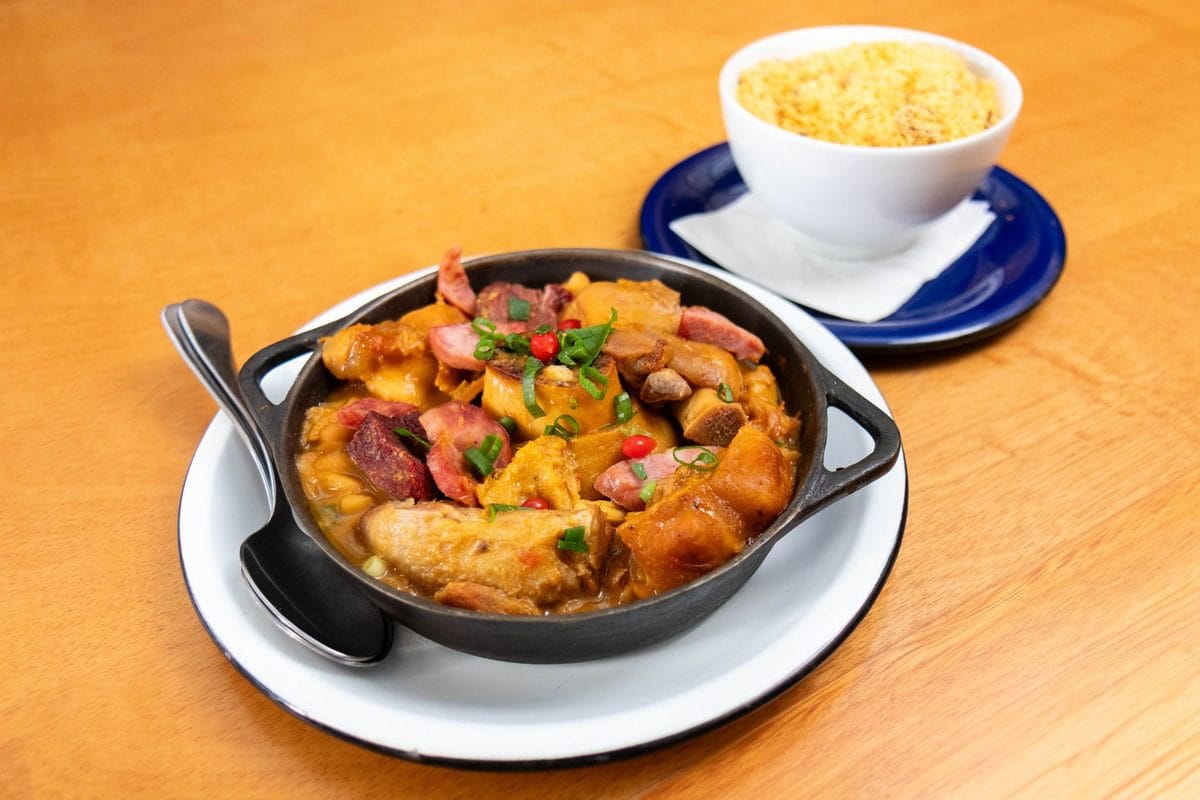
The first properly cold evening of the year is when a Dutch oven comes out of the cabinet, and gumbo is the pot that most people never quite get right. They get the sausage right, the chicken right and the rice right, and they ruin it in the first twenty minutes, standing at the stove with a flour-and-fat paste they got bored of watching. The roux is not a step in the recipe. It is the recipe, and everything that comes after it, the vegetables, the broth, the long gentle simmer, is just a way of spreading that one decision through the pot.
What a roux is doing in there
A roux is equal parts fat and flour cooked together, and in a gumbo it works as both a thickener and a flavoring. The Kitchn's classic Cajun version, a chicken and andouille gumbo from recipe developer Maria Do, uses 4 tablespoons of butter, a quarter cup of neutral oil and half a cup of all-purpose flour, cooked over medium heat while you stir constantly and scrape the bottom of the pot. The color it is aiming for is melted milk chocolate, and the recipe puts that at 10 to 20 minutes. Along the way the smell changes in a way you can follow with your nose: it goes from raw flour to toasted popcorn to nutty coffee, and the moment it smells like coffee is the moment to stop and add the vegetables. Because the color changes slowly and then quickly, most people misjudge it by watching the clock. A better habit is to keep a white plate beside the stove and drop a small spoonful on it every few minutes, so that you are comparing the roux with a fixed reference. Under a kitchen light, roux looks darker in the pot than it does on the plate, and the plate is the more honest of the two.
Other cooks push further. A dark roux, the color of dark chocolate, takes about 30 to 45 minutes of constant stirring according to the food blog Lauren from Scratch, and one South Louisiana cook says that the process can take 20 to 45 minutes or even longer and must not be hurried. Those numbers are not in conflict. They describe different destinations on the same road, and the clock only matters if you also watch the color.
Choose your color, and know what it costs
Here is the trade-off nobody mentions on the recipe card. A lighter roux, closer to peanut butter or milk chocolate, keeps more of its thickening power but has less toasted flavor. A darker roux tastes deeper and nuttier, and it thickens the pot less, so a very dark gumbo is a thinner and more intense one than a lighter gumbo. That is general kitchen knowledge rather than something tested here, but it explains why the same pot of gumbo can be silky in one house and brothy in the next, and why neither is wrong.
If this is your first gumbo, stop at milk chocolate. The Kitchn recipe does, and it is far more forgiving than the very dark versions: the difference between a deep brown roux and a burnt one is a matter of seconds, and a burnt roux cannot be rescued. The advice from the recipe is blunt, and worth repeating: do not turn your back on it, and do not raise the heat to save time, because rushing the roux or turning up the temperature is how you burn it. Black specks mean the batch is finished. Pour it out, wipe the pot and start again, which is annoying but far better than serving a bitter gumbo to six people. The cost of a failed roux is small, a few tablespoons of butter, oil and flour, and a lot less than the cost of a pot of sausage and chicken that has already gone in. Make the roux first and the decision about the rest of the dinner second, and you will never find yourself defending a pot that tastes of char.
A warning about the heat of a roux
Hot roux sticks to skin, and that is why Louisiana cooks treat it with respect. Use a long-handled wooden spoon or a flat-edged spatula, keep children and pets out of the kitchen while you stir, and keep a damp towel within reach rather than walking across the room for one if something spills. If you do not have the patience to stand at the stove, the Kitchn notes that cooks can slowly bake the roux in the oven, which needs less attention but more time, and that is a sound approach for a busy afternoon.
The vegetables go in while the roux is hot
The next step is the holy trinity of Cajun cooking: bell pepper, onion and celery. In the Kitchn recipe, they go into the pot once the roux has reached color, with the heat raised to medium-high, and are stirred until the onions turn translucent, which takes about 10 minutes. The roux is very hot at that point, so the vegetables also halt its darkening, which is one reason it matters to chop everything before you light the stove. Then comes garlic, for two or three minutes until it is fragrant, and the browned sausage and chicken go back in with their juices.
The Kitchn calls for 14 ounces of sliced andouille, a pound of diced chicken thighs, one bell pepper, one onion, three celery stalks and six cloves of garlic, with six cups of low-sodium chicken broth. Browning the sausage and chicken first, in the same pot, leaves fond on the bottom that the roux then lifts as you scrape, and it is one of the cheapest sources of flavor in the whole dish.
The simmer: 35 to 45 minutes at the least
After the broth goes in, you bring the pot to a boil, turn it down to medium-low and let it simmer uncovered until the gumbo has thickened slightly and the flavors have come together. The recipe's time is 35 to 45 minutes, which is the minimum, and gumbo that has had longer will be better, as long as you keep the heat low and give it a stir now and then. The fat from the sausage will rise to the surface, and a spoon or a ladle will lift it off if you prefer a leaner bowl.
Serve it over white rice with sliced scallions and a few drops of hot sauce. Cook the rice separately, in its own pot, while the gumbo simmers, so that it stays distinct and does not soak up the broth.
Okra, filé and tomatoes: three arguments
- Okra is common in the central and northern parts of Louisiana, where it often replaces chicken and sausage, and its natural viscosity thickens the pot. The Kitchn suggests 8 ounces cut into quarter-inch pieces and added with the garlic.
- Filé powder is ground sassafras leaf. It smells earthy, a bit like tea, and works as a thickener, and the usual way to use it is to offer it at the table, so everyone can stir a little into their own bowl, rather than boiling it in the pot.
- Tomatoes belong to Creole gumbo, the richer version with butter, shellfish and tomatoes, not to the Cajun style the recipe follows.
Shrimp are the other swap. In place of the chicken and sausage, the Kitchn adds a pound of peeled shrimp in the last 10 minutes, and if you add them to chicken and sausage, it uses only 8 ounces. Shrimp that cook for longer turn rubbery, so add them last.
Make it the day before
This is the part that suits the low and slow approach best. Gumbo tastes better the day after you cook it, according to the recipe notes, and a covered pot can sit in the refrigerator for up to 2 days before you reheat it over low heat. Leftovers kept in airtight containers last up to 5 days. A pot made on Saturday afternoon is dinner on Sunday with nothing left to do but cook the rice, and it is also a smarter choice for a crowd: you can sit down with your guests instead of standing at the stove. If shrimp are on the menu, add them when you reheat, not when you cook.
Next time the temperature drops, put the roux on first, put on music and keep a spoon in your hand for the whole twenty minutes. The rest takes care of itself.