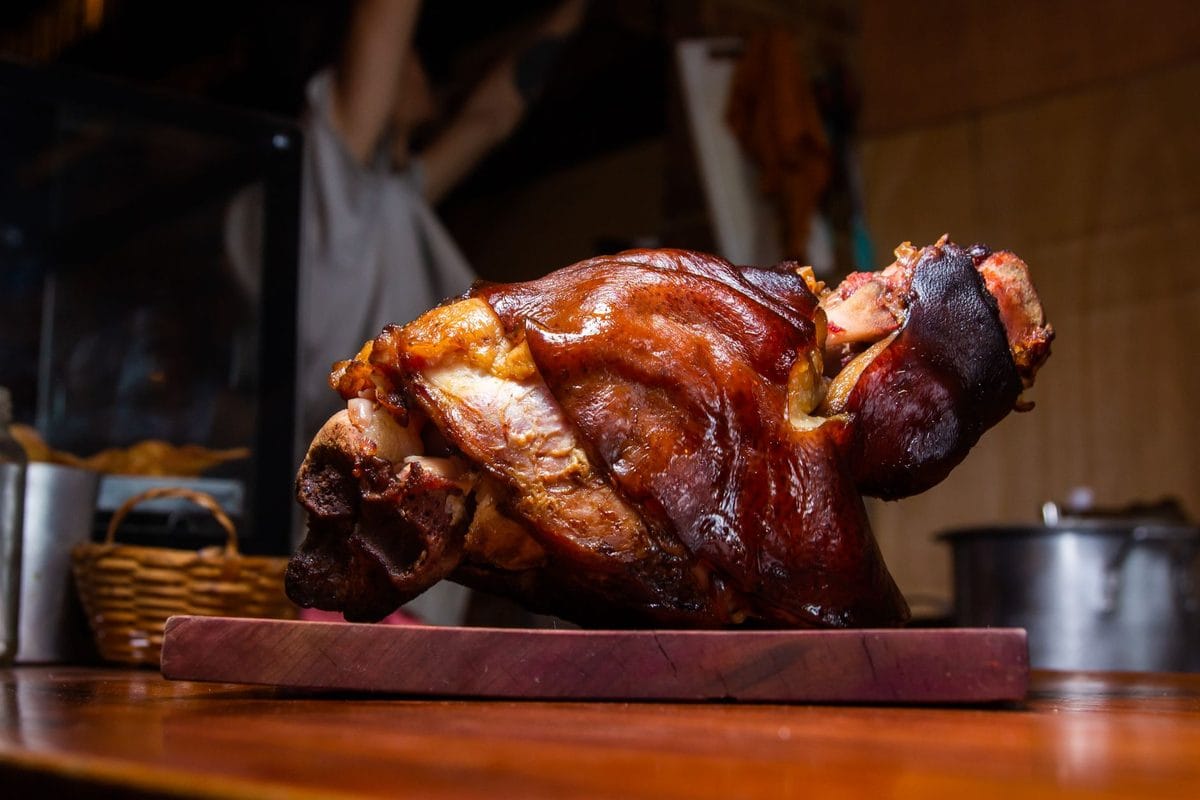
Walk down the meat case the week before Thanksgiving and you will find three kinds of ham within a few feet of each other, each with a label that says something slightly different. Once they are sliced on a platter they look almost identical, which is why people buy the wrong one and then wonder why the dinner went sideways. The mistake is treating the whole category as one roast. A ham that is already cooked and a ham that is still raw can both come out of a smoker glossy and perfect, and the only thing that separates a safe, juicy centerpiece from a disappointing one is the internal temperature you pull it at. The color of the glaze tells you almost nothing. The thermometer tells you everything, and it tells you the same thing whether the ham is coming off a smoker or out of a convection oven.
Thanksgiving falls on Thursday, November 26, 2026, which leaves you a few weeks to decide what kind of ham you want and to order it before the good ones sell out. The smoker makes a strong case for itself on a holiday. It frees the oven for the sides, it fills the house with apple wood smoke for the whole afternoon, and a ham that spends four or five hours at low heat takes on a bark that no oven can match. Still, a ham is the least forgiving of the big holiday meats in one specific way: the wrong label leads to the wrong timeline. Get the label right first, and everything else in this guide follows from it.
Start With the Label, Not the Smoker
Most holiday hams fall into one of three groups, and the wording on the package tells you which one you have. A fresh ham is a raw pork leg with no curing or cooking applied, and it is sold as exactly that. A fully cooked ham has been cured and cooked at the packing plant, so it is ready to eat as sold, and the label says so. A country ham is a dry-cured ham, usually salty and firm, and it is prepared on a different schedule altogether. Ignoring the difference is the single most common reason a holiday ham comes out either dangerously undercooked or dry and tasting of brine. Before you buy, read the front of the package for the word "fresh," "uncooked," or "fully cooked," and then read the cooking instructions on the back, because they are written for that exact product.
Fresh Ham Is a Full Cook
A fresh ham behaves like a large pork roast, and it should be cooked like one. It has never been cured or cooked, so every degree of the cook is doing real work on the meat. The USDA Food Safety and Inspection Service (FSIS) sets the target for fresh and uncooked smoked ham at 145°F, followed by a rest of at least three minutes before carving. That number is the finish line, not a reheat point, and it means the meat has to pass through the whole range of temperatures where collagen breaks down and the connective tissue turns tender. Plan for a smoker running around 225 to 250°F, a long unhurried cook, and a probe in the thickest part of the leg, away from the bone. A fresh ham is the cut that rewards patience and punishes anyone who pulls it early because the clock says it should be done. Expect it to take most of a day for a large leg, and treat any time estimate as a rough guide until the probe confirms it.
Fully Cooked Ham Is a Reheat, Not a Cook
Fully cooked ham is the one most often ruined, and the reason is that it already tastes finished. People put it in the smoker, expect a dramatic transformation, and keep cooking long after the meat has reached the point where it can only get drier. The job here is to warm the ham through, add smoke and glaze, and stop. Everything that happened at the plant already happened, so your only real variable is how far you let the internal temperature climb.
FSIS sets the reheat target for fully cooked hams at 140°F when the ham was packaged in a USDA-inspected plant. It advises an oven no lower than 325°F when you reheat the ham in the oven. Smoking is a different process, and its low temperature adds flavor and time rather than speed, so the number on your thermometer matters far more than the minutes on the timer. Expect a fully cooked ham to take roughly one to two hours in the smoker, depending on its size, and pull it as soon as it reaches the target rather than waiting for a deeper color.
Pull It at the Right Number, Not the Right Hour
The three targets below cover nearly every ham you will see at a holiday table. Keep this table on your phone when you shop, and check the label against the second column before you commit to a timeline.
| What the label says | What you are dealing with | Pull at (internal) |
|---|---|---|
| "Fresh" or "uncooked" | Raw pork leg, needs a full cook | 145°F, then rest at least 3 minutes |
| "Fully cooked," sealed at the packing plant | Ready to eat, you are only reheating | 140°F |
| Cooked and repackaged outside the plant, or leftover | Handled again after cooking | 165°F |
The catch is that the 140°F figure applies only to a ham that left the packing plant sealed. A ham that a deli has sliced or repackaged falls under the 165°F rule, and the FSIS guidance on hams says so plainly. Many shoppers assume a sliced ham is still the plant product, and it is not. If you are buying from a counter and the ham has been cut in front of you, plan for the higher number, because the extra degrees are the difference between a safe reheat and an unnecessary risk. The cost of overshooting is a little more moisture loss, which a good glaze and a foil wrap will cover.
Smoke It Low, Glaze It Late
A sugar glaze is the part of a smoked ham that most people get wrong first. Brown sugar, honey, and mustard look wonderful going on, but they darken quickly at smoker temperatures, and a glaze applied at the start of the cook turns into a black crust long before the ham is hot enough. Smoke the ham unglazed first, then build the glaze in the final stretch, when the surface is already warm and the sugar can set without burning. The method is the one that works for a spiral-cut ham, where the glaze can slide between the slices and pool at the base.
A few habits make the difference between a glossy ham and a scorched one:
- Smoke with a mild wood such as apple or cherry, and keep the smoke light. A heavy hickory cloud overwhelms a ham that is already seasoned.
- Pull the ham from the smoker when it is about 20°F short of its final target, then wrap it in foil with a splash of liquid, which keeps the surface from drying out while the internal temperature finishes climbing.
Spiral-cut hams need extra care, because the cuts open the surface to the heat and the smoke. Wrapping the ham after the smoke phase protects the slices, and a final brush of glaze on the exposed faces before serving gives you the sheen you wanted without the scorch. A bone-in ham needs the same discipline with the probe, because the bone holds heat unevenly and the thickest part can lag behind the rest.
Timing the Ham Backward From Dinner
Work the timeline backward from the moment you want to carve, not from the moment the ham goes into the smoker. A rest of at least 30 minutes gives the juices time to settle, and it also gives you room to finish the sides, reheat the gravy, and clear the counter. Build in a buffer of another 30 minutes, because the first ham you smoke will always take longer than you expect. For a fully cooked ham, the smoker phase is roughly one to two hours, so a 3 p.m. carve on Thanksgiving means the ham goes on around noon and gets its glaze in the last half hour. A fresh ham needs far more time, so it belongs on the smoker the morning before or earlier in the week if you have the space in the fridge.
My recommendation for most families is a fully cooked, bone-in ham from a butcher or a plant-packed brand, because it leaves you the most room for error. Order it from your butcher by mid-November, and ask for the exact weight so you can plan the cook. A fresh ham is the better choice only if you have the time, the smoker space, and the willingness to babysit a long cook. Anything else is a second project layered on top of a holiday you already have to cook for.
Country Ham Needs a Different Plan
Country ham is not a smoked ham in the usual sense. It is dry-cured, often aged for months, and it is salty enough that cooking it straight from the package usually disappoints. The traditional approach is to soak it in cold water for a long time before cooking, changing the water once or twice, and then to simmer or bake it until it reaches a safe internal temperature. Read the producer's instructions before you commit, because the soak time and the cooking method vary between brands, and a country ham from one producer may behave very differently from another. If you want a smoky, glazed centerpiece, a fully cooked ham is the easier route, and you save the country ham for a breakfast table or a platter of thin slices.
When the ham comes off the smoker, put the probe in the thickest part, away from the bone, and trust the number on the display over the color of the glaze. Let it rest before you carve, and carve against the grain so the slices hold together on the platter.