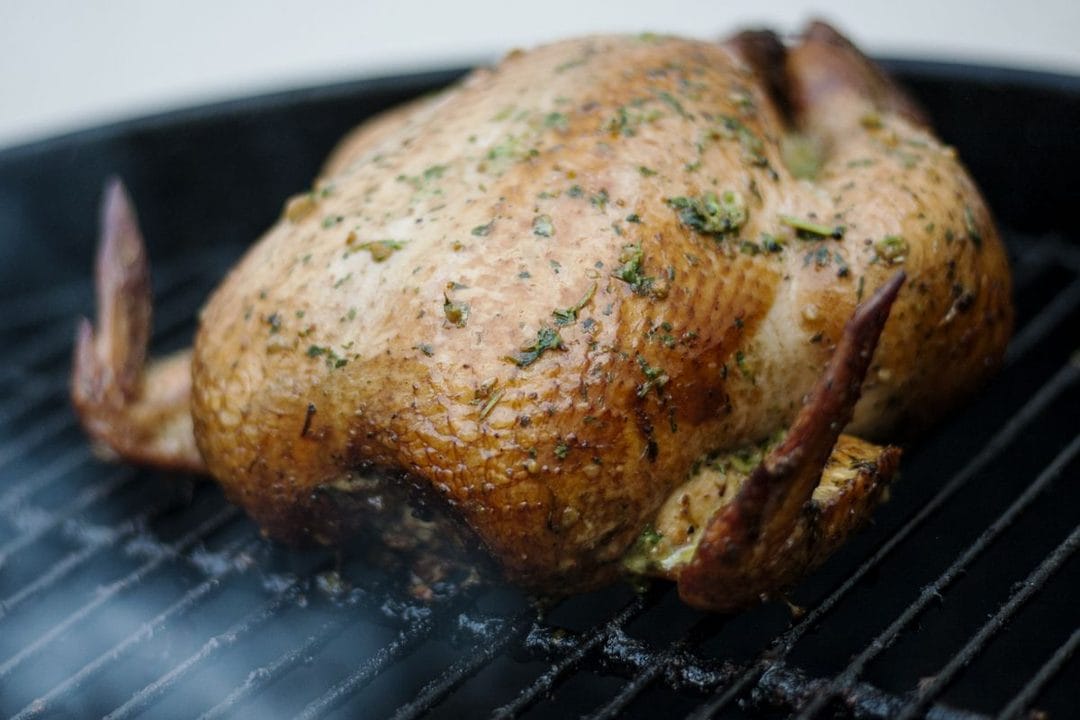
Every November, somebody on a BBQ forum asks the same question: should the turkey get a salt bath first, or straight onto the smoker? The honest answer is that it depends on what you're actually trying to fix — dry breast meat, uneven cooking, or just the six-hour wait that a whole 14-pound bird demands on a 275°F pit. Brining, spatchcocking, and cooking the bird whole each solve a different problem, and conflating them is how people end up with a turkey that's simultaneously over-salted and undercooked at the thigh.
The Brine Case: What It Actually Buys You
A wet brine is a 5-6% salt solution — roughly 1 cup of Diamond Crystal kosher salt per gallon of water — that the bird sits in for 12 to 24 hours before it ever sees smoke. The science behind it is straightforward: salt denatures muscle proteins so they hold onto more water during cooking, and that matters most in the breast, the part of the turkey that dries out fastest because it finishes cooking well before the thigh does. Done right, a brined breast comes off the smoker at 165°F noticeably juicier than an unbrined one pulled at the same temperature, and the difference is obvious even to guests who couldn't tell you why. It's also forgiving of small timing mistakes — if the smoker runs hot for twenty minutes while you're refilling the water pan, a brined bird has more moisture margin before it crosses from juicy to dry. That forgiveness is worth something on a holiday when you're also managing sides, a full table, and relatives asking when dinner's ready. None of that changes the one real drawback, though, which is what happens to the skin.
The catch nobody mentions on the brine-recipe blogs: wet brining waterlogs the skin, and waterlogged skin does not render into anything you'd want to eat off a smoker. You'll get rubbery, pale skin unless you take the extra step of air-drying the bird uncovered in the fridge for 24 hours after the brine and before the smoke — which turns a two-day process into a three-day one. A dry brine (just kosher salt rubbed on and left uncovered in the fridge) sidesteps the skin problem almost entirely and gets you 80% of the moisture benefit, which is why most competition cooks have quietly switched to it over the last several years.
Spatchcocking Changes the Whole Equation
Cut the backbone out with a pair of poultry shears, press down on the breastbone until it cracks, and the turkey lies flat.
That's spatchcocking, and it does something brining can't: it fixes the actual geometry problem that makes whole birds hard to smoke in the first place. A standing turkey is a cylinder of dense breast meat sitting on top of two thighs that need to hit a higher internal temperature — 175°F versus 165°F for breast — and that mismatch is the reason so many whole smoked turkeys come out with a dry breast next to undercooked thigh meat. Flattened out on the grate, the bird cooks far more evenly because every part of it sits roughly the same distance from the heat source and the smoke, instead of the legs and thighs hanging below the breast where they catch less direct heat. A 14-pound bird that would take 6 to 7 hours whole at 275°F is done in 4 to 5 hours spatchcocked, and the skin, freed from the cavity's trapped moisture, actually crisps the way rib or pork-shoulder skin does. Pecan or cherry wood works best here because the flatter surface area picks up more smoke flavor per pound than a whole bird does, so a wood that's too aggressive — mesquite, straight oak — will overwhelm the meat before the internal temp even gets close to done.
This is the better choice for anyone smoking turkey outdoors, full stop. The only real argument against it is presentation — a spatchcocked bird doesn't look like the Norman Rockwell centerpiece your relatives expect at the table, and if that matters more to you than juicy meat and crisp skin, that's a legitimate reason to skip it.
When the Whole Bird Still Makes Sense
There's a case for cooking it whole, and it isn't nostalgia. If you're stuffing the cavity with aromatics — a halved onion, a head of garlic, a few sprigs of rosemary and thyme — that flavor infuses the meat from the inside in a way a flattened bird can't replicate, since spatchcocking removes the cavity entirely. Whole birds also hold heat longer once pulled, which matters if your timeline is loose and dinner might slip by 30 or 40 minutes.
If you go this route, plan for the temperature gradient instead of fighting it. Tent the breast with foil for the first two-thirds of the cook, then pull the foil for the last hour so the skin has time to color and crisp before the thighs finish. Use two probes — one in the deepest part of the breast, one in the thigh without touching bone — and pull the whole bird when the thigh hits 175°F, accepting that the breast will land somewhere around 168-170°F. That's fine. It's above the 165°F food-safety mark, and the carryover cooking as the bird rests under foil for twenty minutes will settle everything out on its own.
Picking a Method for Your Actual Cook
For a standard backyard smoke where the goal is good food and a manageable timeline, dry brine plus spatchcock is the combination worth committing to. Season the flattened bird under the skin the night before with kosher salt and whatever rub you're already running on your ribs or pork butt — no need to reinvent the spice blend for turkey — then let it sit uncovered in the fridge overnight so the skin dries out completely. Smoke at 275°F, pull the breast at 165°F and the thigh at 175°F, and you'll have both textures nailed at the same time, without the three-day runway a proper wet brine demands.
Skip the wet brine unless you have the full three days to do it properly with the air-drying step included. A rushed wet brine — six hours in salt water with no drying time after — is worse than no brine at all, because you get the rubbery skin penalty without the moisture benefit that a full 24-hour soak provides.
One more thing worth saying plainly: don't smoke a turkey over 14 pounds if you're aiming for a same-day cook. Bigger birds push past the safe temperature-danger-zone window too slowly at typical smoker temps, and cranking the pit to 325°F or higher to compensate just dries out the exterior before the interior catches up. Buy two smaller turkeys instead of one large one — most butcher counters will happily break down a 20-pound bird into halves if you ask, and two 10-pound halves smoke evenly in under four hours each.
The Wood and Rub Details That Actually Matter
Turkey is milder than pork or beef, so it picks up smoke flavor fast and can turn bitter if you're heavy-handed. Cherry and apple wood are the safest bets for a first attempt — both read as sweet rather than sharp. Pecan sits a notch stronger and works well if you're already running a Traeger or a similar pellet smoker where the smoke profile tends to run lighter than an offset stick burner. Save hickory and mesquite for the brisket; on turkey they turn acrid well before the bird is done.
For the rub itself, resist the urge to load up on brown sugar the way you would for ribs — sugar burns at lower temperatures than most people expect, and a 4-to-5-hour cook gives it plenty of time to scorch on exposed skin. A simple mix of kosher salt, coarse black pepper, granulated garlic, and paprika under and over the skin does more for the final bark than a twelve-ingredient blend, and it lets the wood smoke actually come through instead of fighting with cinnamon and clove notes that belong on a holiday ham, not a smoked bird.