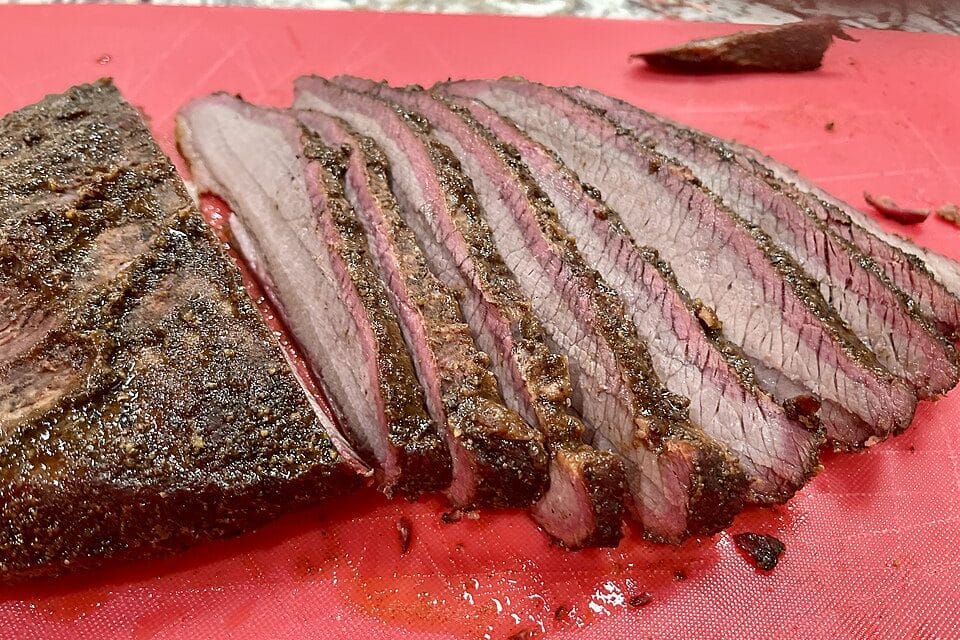
Brisket prices at most grocery chains are sitting between $6.50 and $9 a pound this August, and a full packer that feeds a Labor Day crowd of fifteen easily runs $70 to $90 before you've bought a single side dish. Chuck roast, cut from the same cow and carrying almost the same collagen-to-fat ratio, is sitting at $4.50 to $6 a pound at most of the same stores. Smoked the same way brisket is smoked, it gets close enough that most guests won't ask the difference — and the ones who do usually just want the recipe.
What Chuck Roast Actually Is
Chuck comes from the shoulder, the same general region as brisket's chest-and-shoulder location, and it shares the thing that makes brisket work on a smoker: a heavy load of intramuscular collagen that needs low heat and time to convert into gelatin. A supermarket chuck roast is usually the shoulder clod or a portion of it, sold boneless and tied, weighing anywhere from two and a half to five pounds. It has less overall fat cap than a packer brisket, but the marbling running through the muscle fibers is often comparable, sometimes better on a Choice-grade cut from a store that turns over meat quickly.
The catch is size and grain. A brisket is one flat slab you can trim and slice with the grain running one direction once you know where the flat ends and the point begins. A chuck roast is a knot of two or three muscles running in different directions, wrapped in silver skin. That's not a flaw — it's why chuck can be pulled apart into shreds almost as easily as pork shoulder, something a brisket flat resists.
Trimming and Seasoning
Trim less than you would on a brisket. Pull off the thick silver skin where you can get a knife under it, square off any hard fat pockets thicker than a quarter inch, but leave the internal marbling alone — there's no fat cap to speak of on most chuck roasts, so over-trimming just leaves you with dry meat by hour four.
Salt and Rub Timing
Salt the roast at least four hours ahead, overnight if your schedule allows it. Two teaspoons of kosher salt per pound is a reasonable starting point; Diamond Crystal and Morton measure differently by volume, so weigh it if you have a scale. After the salt has had time to pull moisture out and reabsorb it, apply a simple beef rub — coarse black pepper, granulated garlic, and paprika in roughly equal parts covers most people's taste, and it's close to what Meat Church's Holy Cow rub delivers if you'd rather buy one than mix it.
Picking the Right Roast at the Counter
Not every cut labeled "chuck roast" is the same piece of meat, and the label alone won't tell you which one you're getting. A chuck eye roast, sometimes shelved near the ribeyes because it's cut from the same muscle group, has more consistent marbling and behaves closest to a small brisket flat. A shoulder clod roast is leaner and larger, often five to seven pounds, and benefits from the fattier rub or a light coat of tallow before it goes on. A 7-bone chuck roast still has bone in it, which slows the cook slightly but adds flavor near the bone — fine for a smaller group, awkward to slice for a crowd.
Grade matters more here than on brisket, where the point's fat cap does a lot of the work regardless of grade. Select-grade chuck can dry out on a long smoke; Choice is the reasonable middle ground and what most grocery chains stock by default; Prime, when a store carries it, is worth the extra dollar a pound if the budget allows. If there's a butcher counter rather than a pre-wrapped case, ask what's freshest and whether they'll trim the silver skin for you — most will, at no charge, and it saves ten minutes of knife work at home.
Setting Up the Smoker
250°F is the number to set and hold, whether you're running a pellet grill, an offset, or a kamado with a heat deflector in place. Oak is the workhorse wood here; hickory works if you like a stronger bark flavor, but avoid stacking mesquite for a cook this long — it turns bitter past three or four hours of steady exposure. A water pan under the meat helps stabilize the smoker's temperature swings and keeps the surface from drying out before the bark sets.
Give yourself six to eight hours for a four-pound roast. That's roughly half the time a full packer brisket needs, which is the other half of the appeal — you can start this at 8 a.m. and have it resting by mid-afternoon instead of setting an alarm for 2 a.m.
The Stall, Briefly
Chuck hits the same evaporative plateau between roughly 150°F and 170°F that brisket and pork butt do — the mechanics are covered in more detail elsewhere on this site if you want the full explanation. On a roast this size the stall usually runs forty-five minutes to an hour and a half. Wrapping in butcher paper once the bark has set, usually somewhere around 165°F internal, pushes through it faster without turning the crust soft the way foil tends to.
Two Ways to Serve It
This is where chuck roast actually beats brisket for a backyard crowd: it works two different ways depending on when you pull it.
- Sliced, brisket-style: pull at 195°F to 198°F internal, rest wrapped in a cooler for at least forty-five minutes, then slice against the grain in thin sheets. Because the roast has multiple muscles running different directions, you'll need to rotate the roast partway through slicing to stay perpendicular to the grain — cut the whole thing one direction and half of it comes out tough.
- Pulled, shoulder-style: keep it on until 203°F to 205°F, rest the same way, then pull apart with forks or gloved hands. At this temperature the collagen has fully broken down and the muscle separates along its natural seams almost on its own.
Pulled is the more forgiving option if you're cooking for a mixed group and don't want to worry about grain direction under pressure with twenty people standing around a cutting board.
Cost Math for a Labor Day Crowd
A four-pound raw chuck roast yields roughly two and a half pounds of usable meat after trim and moisture loss during the cook — enough for eight to ten sandwiches. At $5.50 a pound raw, that's about $22 for a protein that would run closer to $65 to $75 in brisket at current prices for the same yield. For a table of fifteen, two chuck roasts at roughly $44 total covers the same ground as one modest packer brisket, with two smokers' worth of bark instead of one.
Cooking It a Day Ahead
Chuck roast holds up to advance prep better than a sliced brisket does, which matters if Labor Day itself is packed with other obligations. Smoke it the day before, pull it off at whichever internal temperature matches how you plan to serve it, then rest and refrigerate whole, unsliced and unpulled, wrapped tightly in the same paper or foil it finished in. On the day of, reheat gently: a covered roasting pan in a 275°F oven with a splash of beef broth in the bottom brings it back without drying it further, usually forty-five minutes for a whole roast. Slice or pull only after it's reheated, not before — meat that sits pre-sliced in the refrigerator overnight loses more moisture than meat that sits whole.
This also solves a real scheduling problem. A six-to-eight-hour cook that has to land at a specific serving time means babysitting a smoker through the middle of a Saturday. Doing it a day early removes that constraint entirely and leaves the day of the cookout for the side dishes, the drinks, and the yard.
Serving It
Chuck roast takes a beef rub and a smoke profile close enough to brisket that it pairs with the same regional sauce styles — Kansas City sweet-and-thick or a thinner Texas-style peppery sauce both work, and that ground has already been covered in detail in the regional sauce guide on this site. Toasted buns, a simple vinegar slaw for acid, and pickles are really all it needs beyond that. Skip anything that competes with the bark; the point of this cut is that the smoke and the crust are doing most of the work a $9-a-pound brisket would otherwise be doing.