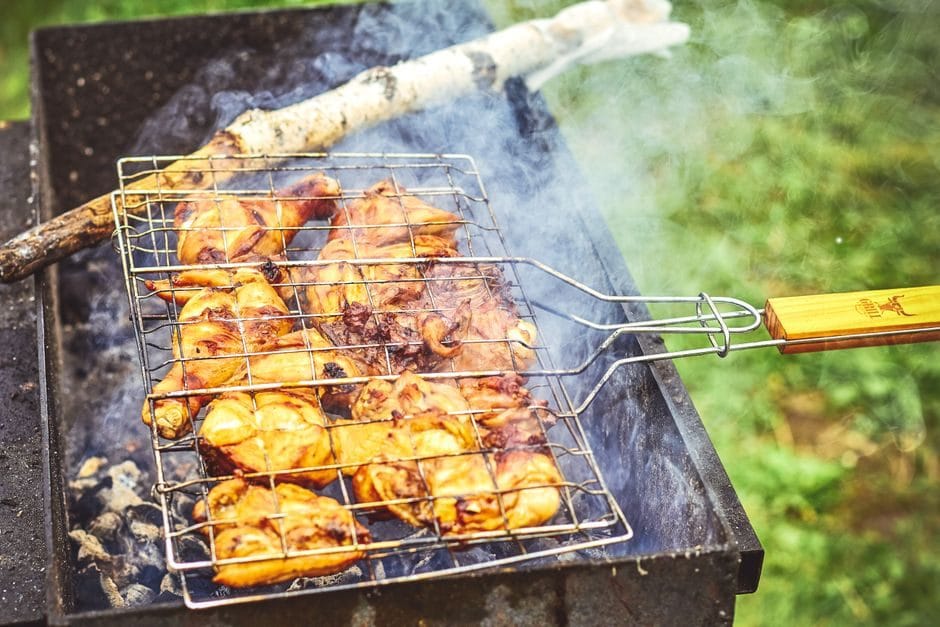
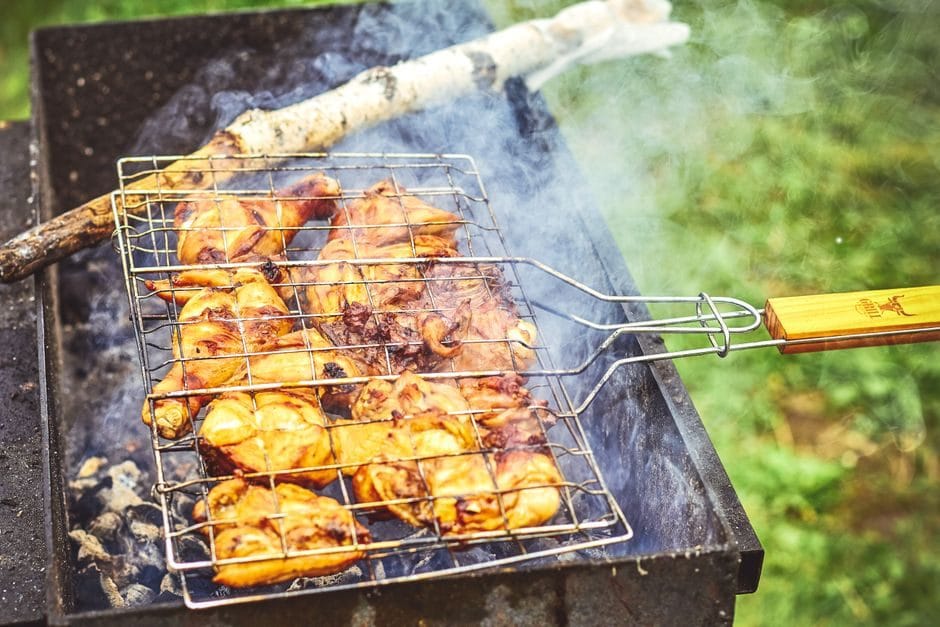
Everybody who smokes chicken hits the same wall the first few times. The meat comes off juicy, the smoke ring is there, the flavor is right — and then you bite in and the skin peels off your teeth like a wetsuit. Rubbery, pale, no snap. On a hot Fourth of July weekend, when you want a tray of thighs people can grab and eat standing up, that skin is the whole ballgame. The good news is it's a heat problem, not a talent problem, and it's fixable on any smoker.
Why chicken skin goes rubbery in a smoker
Chicken skin is mostly fat and water held in a layer of collagen. To turn crisp, it has to do two things: render out that fat, and drive off the surface moisture. Both need real heat. The trouble is that low-and-slow brisket temperatures — 225°F, 250°F — are nowhere near hot enough. At 250 you cook the meat through long before the skin ever renders, so you pull perfectly cooked thighs wearing a layer of cold, wet rubber. The brisket habit is exactly what's working against you here.
Run it hotter than you think
Chicken is not a low-and-slow cut. It's tender already; there's no connective tissue that needs hours to break down, so the slow approach buys you nothing and costs you the skin. Set the smoker to 325°F to 350°F and treat it more like a smoky oven. Thighs will run through in 45 minutes to an hour, and that higher chamber temp gives the fat a fighting chance to render while the meat finishes.
If your smoker fights you above 300 — a lot of offset and bullet smokers do in summer — you have two moves. Bank the coals tighter and open the vents wide, or just plan to finish the thighs over direct heat at the end, which I'll get to.
Dry the skin out the night before
This is the step people skip and then wonder why nothing crisps. Surface moisture is the enemy, so get rid of it before the meat ever sees smoke. Pat the thighs bone dry, salt them all over, set them skin-up on a rack over a sheet pan, and leave them uncovered in the fridge overnight — eight hours minimum, longer is better. The fridge air pulls moisture out and the salt firms the skin up. It's the same trick that gets you good crackling on pork, and it does more for chicken skin than any rub.
One thing to skip: don't oil the skin thinking it helps it crisp. Oil just steams under smoker heat. Dry salted skin beats oiled skin every time.
A rub that won't burn at 350
Higher heat changes the rub math. A lot of barbecue rubs are loaded with brown sugar, and sugar starts to scorch around 350°F — you'll get black, bitter patches before the hour's up. For hot-smoked chicken, lean on a savory base and go easy on the sugar:
- Kosher salt and coarse black pepper as the backbone
- Garlic powder, onion powder, and a good hit of smoked paprika for color
- A little cayenne if you want heat, and only a teaspoon or so of sugar in the whole batch
Season after the overnight dry, not before, or the salt you already added stacks up too high.
The last five minutes are where it's won
Even at 350 in the chamber, the surest path to snap is to finish over direct flame. Pull the thighs when they hit about 170°F internal — chicken thigh is forgiving and actually eats better a touch past the 165 safe line, where the connective tissue softens — then lay them skin-down right over the coals or a hot grill grate for three or four minutes. Watch them; that's where flare-ups happen. You're listening for the skin to sizzle and go from floppy to taut.
Sauce, if you're saucing, goes on in those final minutes too. Brush a thin coat, let it tack up over the heat, brush a second. Sauce on early just burns the sugar; sauce at the end glazes.
The short version
Dry the skin overnight, run the smoker at 325 to 350 instead of brisket temps, keep the sugar low so it doesn't scorch, and finish skin-down over direct heat. Do those four things and the thighs come off the grate with skin that snaps, in time for the cooler beer to still be cold. Chicken rewards you fast — you'll know by the first bite whether you nailed it, and you'll have all summer to dial it in.