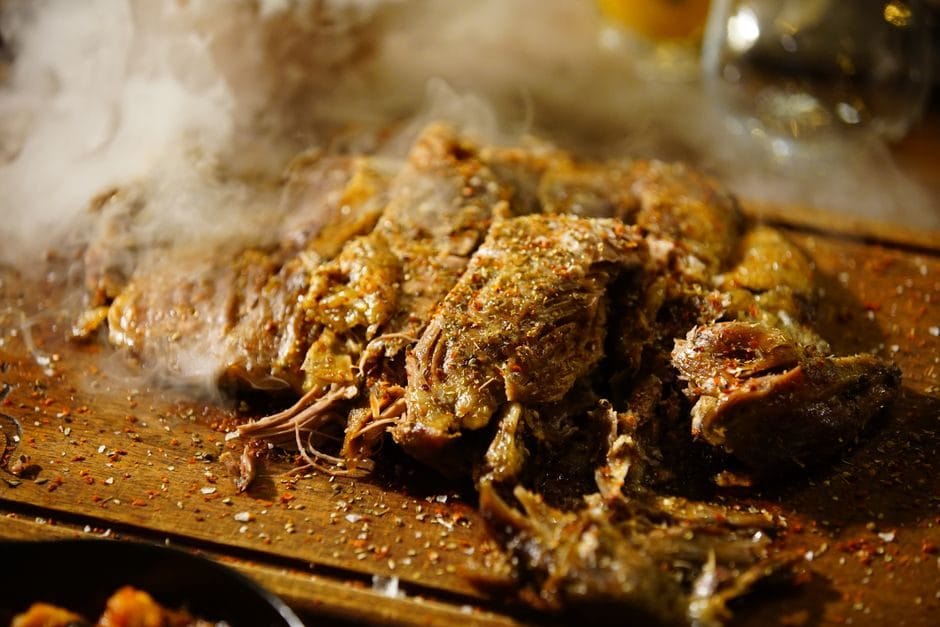
You pull the pork shoulder off at 203°F, let it rest, and start the pull. The meat shreds like it should. But the outside is pale and soft instead of that dark, crackly crust you were chasing all day. That crust has a name — bark — and getting it right is the difference between pulled pork that disappears off the table and pulled pork that just gets eaten.
Bark is where most of the flavor on a smoked shoulder actually lives. It's the result of the rub, the rendered fat, and the smoke fusing into a crust through a slow Maillard reaction and a little bit of polymerization on the surface. People obsess over wood and temperature, which matter, but they skip the handful of small choices that decide whether you end up with bark at all. Here's how to stack the odds in your favor on a Boston butt.
Start with a dry surface and a real rub
Bark needs a dry surface to form. If you pull a shoulder out of the fridge dripping wet and slap it straight on the smoker, the first hour goes into evaporating that surface moisture instead of building crust. Pat it down with paper towels. Better yet, leave the rubbed shoulder uncovered on a rack in the fridge overnight — the cold air dries the surface and the salt works its way in. This is the same idea as dry-brining a steak, and it pays off the same way.
Your rub does two jobs here. Salt seasons the meat and pulls a little moisture to the surface to dissolve the rest of the spices into a paste that bakes on. Sugar browns and helps the crust set. The classic ratio for a Memphis-style shoulder rub is roughly two parts brown sugar to two parts paprika to one part kosher salt, with black pepper, garlic powder, and a little cayenne filling out the rest. Go heavy. A shoulder can take far more rub than you think — a thin dusting just disappears.
One thing to watch: if your rub is mostly sugar and you're running hot, that sugar will burn before the bark forms, leaving you with a bitter, scorched crust instead of a sweet one. Keep the pit at 225–250°F and the sugar behaves.
The wrap question, and why it kills bark
Somewhere around 160–170°F internal, the shoulder hits the stall. The surface moisture evaporates faster than the meat heats, evaporative cooling kicks in, and the temperature flatlines — sometimes for two or three hours. It's maddening the first time you watch it. Plenty of cooks panic here and reach for foil.
Wrapping in foil — the Texas crutch — does blast through the stall by trapping steam and stopping the evaporation. You'll shave an hour or more off the cook. The catch is that the same steam that speeds things up also softens the bark you spent four hours building. Unwrap a foiled shoulder and the crust is often soggy and pale.
If you care about bark, you've got three honest options. Ride out the stall naked — longest cook, best bark. Wrap in butcher paper instead of foil — peach paper breathes just enough to let the surface stay drier while still cutting the stall down a bit. Or wrap late, once the bark has already set around 175°F, so you protect the crust you've already made. I'd take butcher paper over foil on a shoulder every time; it's the move that gives you most of the speed without trading away the crust.
Wood, smoke, and the lie about the first three hours
You'll hear that meat stops taking smoke after the first few hours, so there's no point feeding the fire later. That's only half true. The smoke ring — the pink layer just under the surface — does mostly form early, while the meat is still cold and the nitric oxide from combustion can react with the myoglobin. But smoke flavor keeps depositing on the surface the whole cook, and that surface is exactly where your bark is. Keep clean smoke going.
Clean is the operative word. For pork shoulder, the sweet fruit woods are hard to beat:
- Hickory — the default for a reason, strong and a little bacon-like; the one most people picture when they think of barbecue.
- Apple, cherry, or pecan for something milder and sweeter that won't bully the meat over a 10-hour cook.
- Oak as a steady base wood if you want a backbone and don't want the smoke flavor to swing around.
- A small chunk of mesquite if you really want a punch — but only a chunk, since mesquite goes acrid fast on a long cook.
Thin blue smoke, the kind you can barely see, is what you want. Thick white or gray smoke means your fire is starved for air, and that's the stuff that leaves a creosote tang on the bark and a film on the back of your throat. Crack the vents, let the fire breathe.
Heat, time, and the rest that finishes it
A whole bone-in Boston butt runs 8 to 9 pounds and takes roughly 1.5 hours per pound at 225–250°F — call it 12 to 14 hours, though the stall makes any clock estimate a rough guess. Cook to feel, not to time. You're done when a probe slides into the meat next to the bone with no resistance, which usually lands around 200–205°F internal. Pulled at 195°F it'll still be a little tight; give it those extra few degrees.
Then rest it, and rest it longer than feels reasonable. Wrap the shoulder in a towel, set it in an empty cooler, and leave it at least an hour — two is better. The temperature evens out, the muscle relaxes, and juices that would've run out onto the cutting board stay in the meat. A shoulder rested properly pulls into moist strands; one you tear into straight off the pit sheds half its juice in the first sixty seconds.
Pull it with your hands or a couple of forks, mix the dark bark bits back through the pale interior meat so every bite gets some, and hit it with a splash of cider vinegar if it's eating rich. The bark you fought for all day is the seasoning. Don't let it sit in a clump on the side of the pan.