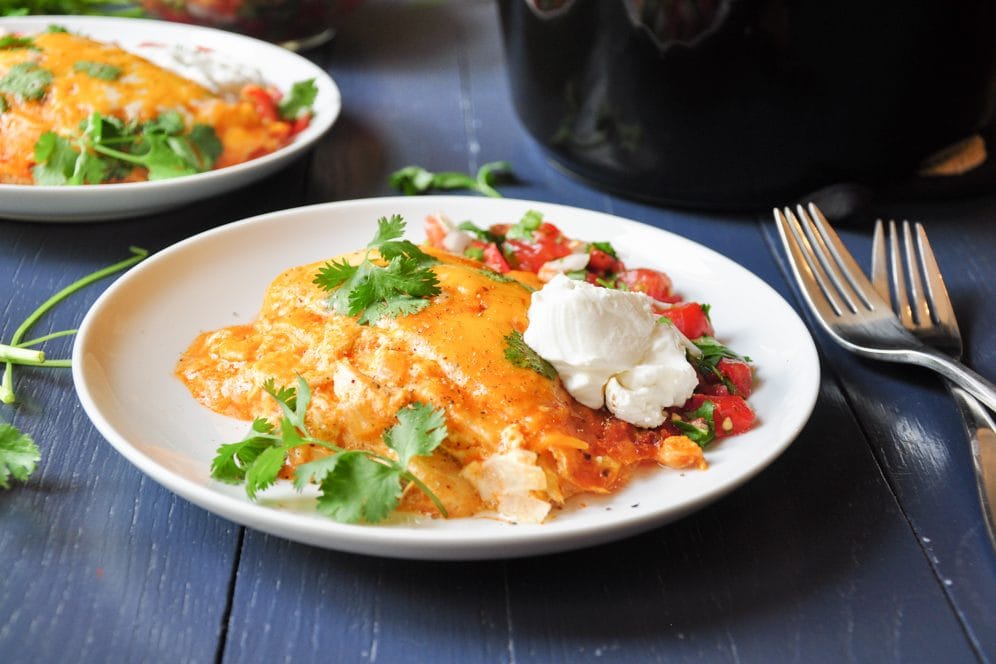
Sunday night before the first week of school, and the calendar already looks like a losing hand: back-to-school night on Tuesday, soccer tryouts Wednesday, a dentist appointment wedged into Thursday afternoon that somehow still means dinner has to happen by 6. This is the week takeout wins by default, not because anyone chose it, but because nobody had ninety free minutes to plan around it. The fix that actually holds up isn't a meal-kit subscription or a Sunday spent standing at the stove -- it's five gallon freezer bags, a permanent marker, and one hour of raw assembly that turns into five nights of dump-and-go slow cooker dinners.
Why Freezer Dump Meals Beat the Meal-Kit Box This Particular Week
Meal-kit services solve a real problem, but they solve the wrong one for late August. They still ask you to chop, sear, and stand at a stove for 25 to 40 minutes on a night when the only free block you have is the twelve minutes between pickup and practice. A freezer dump meal asks for something different: raw ingredients, portioned and bagged in advance, that go straight from freezer to fridge the night before and from fridge to slow cooker the next morning. By 5:30 p.m., dinner has been cooking itself for eight hours and nobody touched a knife after Sunday.
The math works out cheaper too. A HelloFresh or Home Chef box runs $8 to $11 per serving once shipping is factored in; a five-meal freezer stash built from Costco chicken thighs, Aldi pantry staples, and a $6 bag of jarred salsa verde lands closer to $3.50 to $4.50 per serving, protein included. For a family of four eating five dinners that week, that's a difference of roughly $130 to $160 saved, and the leftovers reheat for lunch the next day instead of getting thrown out because nobody wants cold pasta twice.
The Five Meals Worth Freezing
Not every recipe survives a week in the freezer and eight hours in a slow cooker without turning to mush or separating into something unrecognizable. These five hold up, and each one takes under fifteen minutes to bag once the ingredients are on the counter.
- Salsa Verde Chicken: 2 lbs boneless skinless chicken thighs, a 16 oz jar of salsa verde (505 Southwestern or Trader Joe's both work), 1 tsp cumin, juice of one lime. Shreds beautifully after eight hours on low; serve over rice or in tortillas.
- Mississippi Pot Roast: a 3 to 3.5 lb chuck roast, one packet ranch seasoning, one packet au jus mix, a stick of butter, half a jar of pepperoncini with a splash of the brine. This is the one everyone in the family actually asks for by name.
- Chicken Tortilla Soup Base: 1.5 lbs chicken breast, a 15 oz can black beans (drained), a 15 oz can Rotel diced tomatoes, a cup of frozen corn, 4 cups chicken broth added fresh at cook time rather than frozen in the bag. Add tortilla strips and shredded cheese at the table.
- Teriyaki Chicken Thighs: 2 lbs boneless thighs, 3/4 cup soy sauce, 1/3 cup brown sugar, a tablespoon each of grated ginger and minced garlic. Finish with sesame seeds and scallion over rice -- do not add cornstarch until the last 20 minutes, or it thins out during the long cook instead of thickening.
- White Bean Turkey Chili: 1.5 lbs ground turkey, browned and cooled before bagging (the one exception on this list -- raw ground meat compresses into a solid disc that won't break apart properly from frozen), two 15 oz cans great northern beans, a 4 oz can diced green chilies, 1 tbsp cumin, 1 tsp oregano.
The Assembly Line That Takes an Hour, Not a Day
Line up five one-gallon freezer bags -- Ziploc's double-zipper bags run about $7 for a box of forty at Target and are worth the extra fifty cents over the store brand, because a leaking bag in the freezer ruins everything stacked below it. Label each bag with a Sharpie before you fill it, not after: the protein, the cook temperature (low for eight hours or high for four), and the date. Set out five mixing bowls, dump one recipe's dry seasonings and sauces into each bag first, then add the protein last so it doesn't sit in liquid on the counter while you're assembling the other four. Squeeze as much air out as possible before sealing -- a bag with trapped air freezes into an odd bulging shape and takes up nearly twice the shelf space of one pressed flat. Press the air out, lay each bag flat on a sheet pan, and stack the pans in the freezer until the bags are frozen solid -- laying them flat first means they stack like books later instead of taking up a shelf each as lumpy blobs. Once they're solid, usually after about six hours, you can pull the sheet pans out and the bags stay flat on their own.
Total active time for five meals: about 55 minutes, most of it spent measuring soy sauce and chopping the two things that need chopping. That is less time than a single trip to pick up takeout for a family of four, and it buys five dinners instead of one.
What Actually Freezes Well -- and the USDA Rule Nobody Follows
Here's the part most freezer-meal roundups skip past: the USDA does not recommend cooking meat directly from frozen in a slow cooker, because the appliance can take too long to bring a solid frozen mass through the temperature danger zone (40°F to 140°F), even on low. A lot of the viral freezer-meal content treats "straight from freezer to slow cooker" as the whole appeal, which is exactly the part that skips a food-safety step. The safe version of this method means pulling the bag from the freezer to the refrigerator the night before -- it needs roughly 24 hours to thaw fully in the fridge -- and only starting the slow cooker once the contents are thawed, not still icy in the center. Set a recurring phone reminder for 9 p.m. the night before each bag is due, because this is the step people forget after the first week once the novelty wears off. That single extra step is the difference between a genuinely safe dump meal and one that just looks convenient on Pinterest.
Dairy-based sauces, anything with pasta already cooked into it, and delicate vegetables like zucchini or spinach don't belong in this method at all -- cream sauces break and separate over a long cook, pasta turns to paste, and soft vegetables dissolve into the broth by hour six. Sturdier vegetables -- carrots, potatoes, bell peppers, onions -- freeze and cook fine alongside the protein. If a recipe calls for rice, pasta, or dairy, add it fresh in the last 20 to 30 minutes of cooking instead of freezing it in the bag.
The Sunday-to-Wednesday Math
One prep session doesn't have to mean one week of identical dinners stretching out ahead of you like a chore. Freeze five bags on the last Sunday of August, and you've covered the entire first week back -- pull Monday's bag into the fridge on Sunday night, Tuesday's on Monday night, and so on, so there's always one thawing while another cooks. By the second week, when the initial back-to-school chaos has settled into something more predictable, most families find they only need two or three freezer meals to fill the gaps around normal cooking -- which means one Sunday session in late August can realistically stretch across ten to twelve dinners over three weeks if you're not freezing a new batch every single week.
Freezer Bag Logistics Nobody Tells You
A standard freezer takes these five bags without much trouble once they're frozen flat, but the first 24 hours before they're solid is where kitchens run out of room. Clear one shelf entirely before you start filling bags, and use a cheap dollar-store bag rack or simply lean the sheet pans against the freezer wall at a slight angle so the bags freeze flat rather than folding over each other into odd shapes. Once solid, they stack like a small filing cabinet, and you can fit a full month of dump meals -- sixteen to twenty bags -- into the space a large pizza box would otherwise occupy.
Skip the vacuum sealer unless you already own one. The freezer burn risk over two to three weeks is minimal with a well-sealed gallon bag, and vacuum-sealing raw chicken in sauce tends to pull liquid into the machine anyway. Save that tool for meat you're freezing dry, without marinade, for longer than a month.
Getting It on the Calendar
Write the five dinners directly onto the kitchen calendar or the family group chat the same Sunday you freeze them -- Monday: Salsa Verde Chicken, Tuesday: Mississippi Pot Roast, and so on -- so nobody has to make a decision on a Wednesday afternoon that already has too many decisions in it. The whole point of this method isn't the recipes themselves; plenty of dump-meal combinations work. It's removing dinner from the list of things that require a decision during the one week of the year when decision fatigue is already running the household. Do the deciding once, on a quiet Sunday, and let the slow cooker handle the rest.