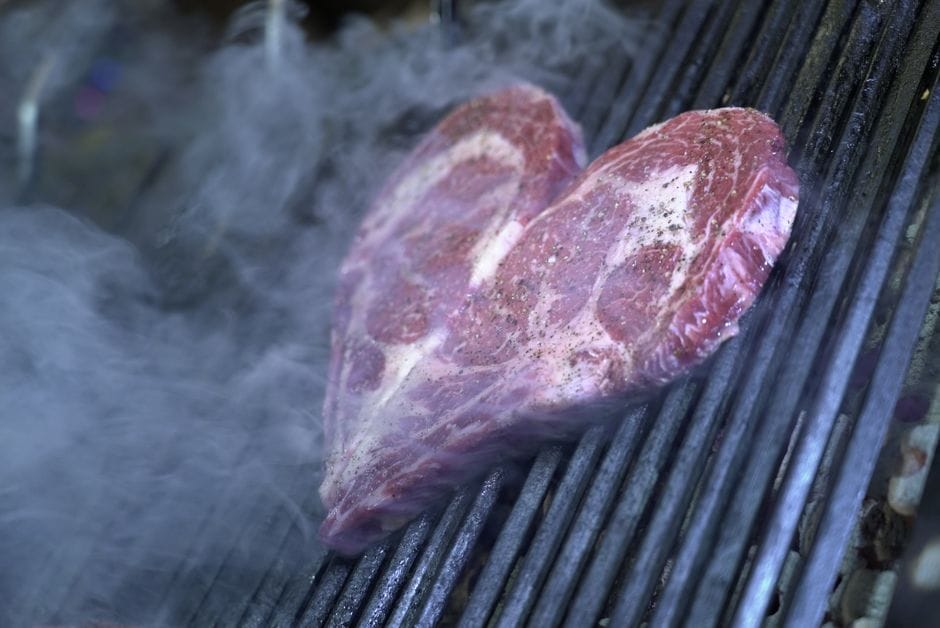
A good steak crust is not luck. It is dry meat hitting a pan that is genuinely hot, and most home steaks fail one of those two tests. Fix both and you get the deep brown, slightly crackly surface that makes the whole thing taste like a steakhouse.
Dry the surface first
Water is the enemy of browning. Anything wet on the steak has to boil off before the meat can brown, and while it boils, your steak is steaming. Pat both sides hard with paper towels. If you have time, salt the steak and leave it uncovered on a rack in the fridge for an hour or even overnight. The salt pulls moisture out, then it gets reabsorbed, and the surface dries to a tacky finish that browns fast.
Get the pan honestly hot
Use cast iron or heavy stainless, never nonstick, which cannot take the heat. Set it over medium-high for a few minutes until a drop of water skitters and vanishes. Add a thin film of a high-smoke-point oil like grapeseed or refined avocado. When it shimmers and just starts to wisp, lay the steak down away from you.
Leave it alone
- Press it flat for the first ten seconds so the whole face makes contact.
- Do not move it for two to three minutes. Poking and flipping resets the browning every time.
- When it releases cleanly from the pan, it is ready to turn. If it sticks, it is not done browning.
Baste and rest
After the flip, drop in a tablespoon of butter, a smashed garlic clove, and a sprig of thyme. Tilt the pan and spoon the foaming butter over the top for the last minute. Pull the steak at about 125 degrees for medium-rare, because it keeps cooking off the heat. Then the part everyone skips: rest it five to ten minutes on a board. Cut too early and the juice runs out onto the cutting board instead of staying in the meat. Slice against the grain and you are done.