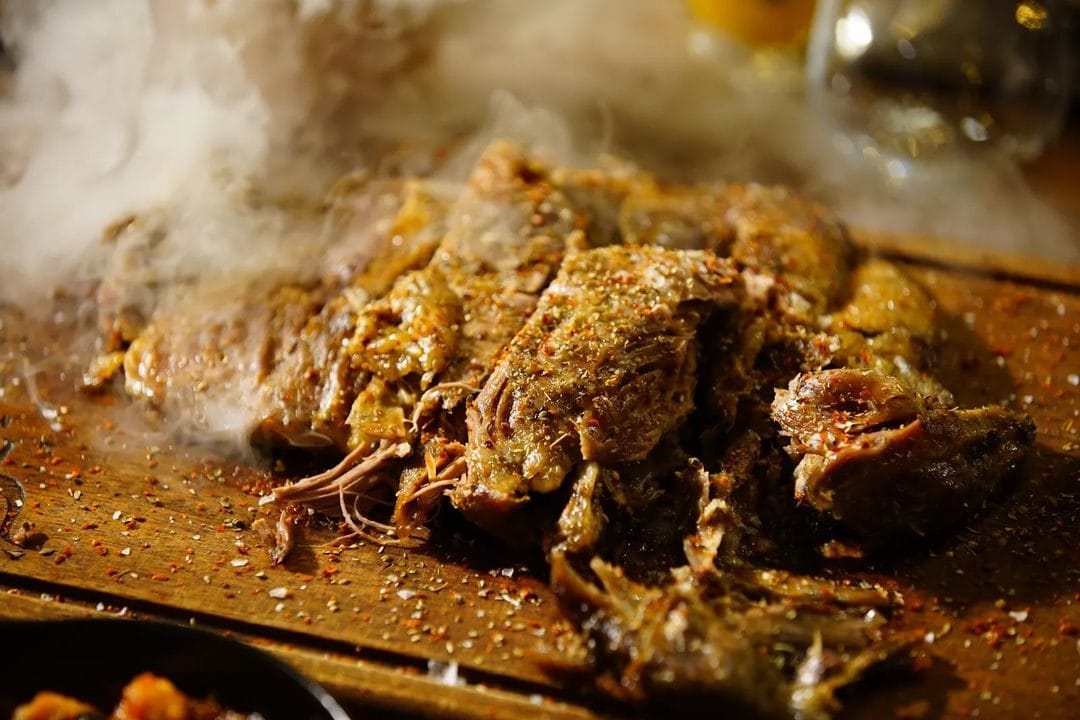
Twenty people are coming over on Labor Day, and you have already decided you are smoking the meat instead of grilling burgers off a propane tank. Good instinct. The mistake almost everyone makes at this stage has nothing to do with rub or wood choice — it is math. Buy too little pulled pork and you are apologizing at 6 p.m. while your neighbor's uncle eyeballs the last spoonful. Buy too much brisket and you are eating brisket hash for two weeks, which, honestly, is not the worst outcome, but it is not the plan either.
The Pound-Per-Person Numbers That Actually Hold Up
Every BBQ planning chart you find online repeats the same half-pound-per-person figure, and it is close enough for a backyard burger cookout but wrong for smoked meat. The reason is shrinkage, and it is bigger than most home cooks expect. A pork shoulder loses roughly 35 to 45 percent of its raw weight by the time it is pulled — rendered fat, evaporated moisture, and the bark you trimmed off the outside all add up. Brisket runs even higher, often 45 to 50 percent, because you are cooking off both fat cap and a long stall's worth of moisture over twelve-plus hours. Ribs lose less relative weight but come with bone, so the edible yield per raw pound is lower than a shoulder or a brisket.
Here is the raw-weight math that holds up against an actual scale, not a chart someone wrote without ever weighing a cooked butt:
- Pulled pork (Boston butt): 0.75 lb raw per person as a main protein, 0.4 lb if it is one of two or three proteins on the table
- Brisket: 1 lb raw per person as a main, 0.5 lb as a secondary protein — yes, that is more than pork, because brisket's yield percentage is worse
- Spare ribs or baby backs: 1 to 1.25 lbs raw (bone-in) per person if ribs are the centerpiece, half that if they are a side option
- Chicken thighs, bone-in: 0.6 lb raw per person — chicken shrinks the least of the four, maybe 25 percent, since there is far less rendering going on
Those numbers assume a mixed crowd of adults and a handful of kids, with sides on the table pulling some of the plate real estate away from the meat. If your Labor Day group skews toward serious eaters — a softball team, a construction crew, your brother-in-law who does not stop at one plate — add 15 percent across the board. If half the guest list is under twelve, you can trim 20 percent and nobody will notice.
Worked Example: Twenty Guests, Two Proteins
Say you are doing pulled pork as the main event with a rack or two of ribs on the side, which is a genuinely smart Labor Day combination — the pork holds in a cooler for hours while the ribs come off closer to serving time. For 20 guests: 20 × 0.75 lb pulled pork (as the primary) actually shifts down to about 0.55 lb per person once ribs are sharing the plate, so call it 11 lbs of raw pork shoulder — that is one 9-to-10 lb butt plus a smaller 3-pounder, or two mid-size butts from Costco. Add ribs at the "secondary protein" rate of roughly 0.6 lb bone-in per person, which lands you at three full racks of St. Louis-cut spares.
At Sam's Club or a decent butcher counter, pork shoulder runs $2.49 to $3.49 a pound depending on region and whether it is bone-in; figure $30 to $38 total for 11 lbs. Spare ribs run $3.99 to $4.99 a pound, so three racks at roughly 6.5 lbs each — about 19.5 lbs — puts you near $85 to $95. Rub, wood, and a couple of bottles of finishing sauce add another $20 or so if you are using a store brand like Meat Church Honey Hog or making your own from pantry spices. Total meat-and-seasoning budget for this cook: somewhere around $135 to $155 for 20 people, which works out to under $8 a head — cheaper than most catered options and considerably better.
Running Two Smokers, or One Smoker Doing Double Duty
The real logistics problem on Labor Day is not the shopping list — it is fitting a butt and three rib racks onto one cooker without babysitting a thermometer app all day. If you are working with a single offset or a Weber Smokey Mountain, ribs and pork butt do not need to start at the same time, and they should not. Pork shoulder wants 12 to 14 hours at 225°F to hit that fall-apart 203°F internal; ribs are done in 5 to 6 hours using the 3-2-1 method or a straight 5-hour no-wrap cook if you like more bite. Start the butt at 8 p.m. the night before, let it ride overnight, and it will be resting in a cooler — wrapped in butcher paper, then a towel, then sitting in an empty cooler with no ice — well before your ribs even go on the grates at 10 a.m.
That resting window matters more than people think, and not just for scheduling. A pork butt held at 150°F-plus for two to four hours in a cooler continues breaking down connective tissue the whole time, so it actually pulls easier than one you rush straight from smoker to cutting board.
If you own a Traeger or another pellet cooker with a big enough grate, you can run both at once on separate racks — put the ribs on the lower rack away from the direct heat deflector and the butt up top, since pork shoulder is more forgiving of a few degrees' temperature swing than ribs are. A ThermoWorks Smoke or a Meater probe in the butt lets you walk away and check your phone instead of standing at the cooker every twenty minutes, which on a holiday with people in your yard is worth the $99 more than almost any other piece of gear you will buy this year.
What to Smoke Yourself vs. What to Buy Pre-Made
Smoke the protein. Buy the sides. That is not a compromise, it is the correct division of labor for a 20-person cookout where you are also supposed to be a host and not spend the whole day at the cooker. Store-bought coleslaw from a decent grocery deli runs $4 to $6 a pound and, doctored with a splash of apple cider vinegar and extra black pepper, is indistinguishable from homemade by 3 p.m. when everyone is three beers in. Baked beans from a can — Bush's or Van Camp's, doctored with brown sugar, a spoonful of your leftover rub, and a handful of the burnt ends trim from a previous cook if you have any — taste like they took hours.
Where I will push back on the buy-it-all instinct: cornbread and pickles are worth doing yourself. Both take under 30 minutes of active time, both are dramatically better fresh, and a skillet of cornbread baked in the leftover heat of your kitchen oven while the smoker runs outside costs you almost nothing in attention. Quick-pickled red onions — a cup of vinegar, a cup of water, two tablespoons of sugar, sliced onion, thirty minutes in the fridge — cut through the richness of pulled pork in a way bottled pickles never quite manage.
The Shopping Checklist
Print this or screenshot it before you head to the store, because forgetting the wood chunks is a Labor Day tradition nobody actually wants to keep:
- Pork shoulder / Boston butt — 11 lbs for the 20-person example above, bone-in preferred for flavor
- Spare ribs or baby backs — 3 racks, St. Louis-cut trims cleaner for slicing at the table
- Rub — enough for two applications per cut if you like a heavier bark; Meat Church or a homemade brown-sugar-and-paprika base both work
- Wood — hickory or oak chunks for the pork, cherry or apple for a milder rib smoke if you want visible color contrast
- Butcher paper for wrapping, plus a cooler you are not using for drinks
- Coleslaw, baked beans, buns — store-bought is fine here
- Cornmeal, buttermilk, and a cast-iron skillet for cornbread
- Vinegar, sugar, and a red onion for quick pickles
- A backup propane or charcoal grill for anyone who shows up wanting a plain burger — someone always does
One more thing worth saying plainly: buy 10 percent more than the math tells you, not because the math is wrong, but because leftover smoked pork shoulder freezes beautifully in vacuum-sealed bags and turns into a free Tuesday dinner in October. Running short on your own holiday is the mistake people remember; running a little long is the mistake nobody complains about.