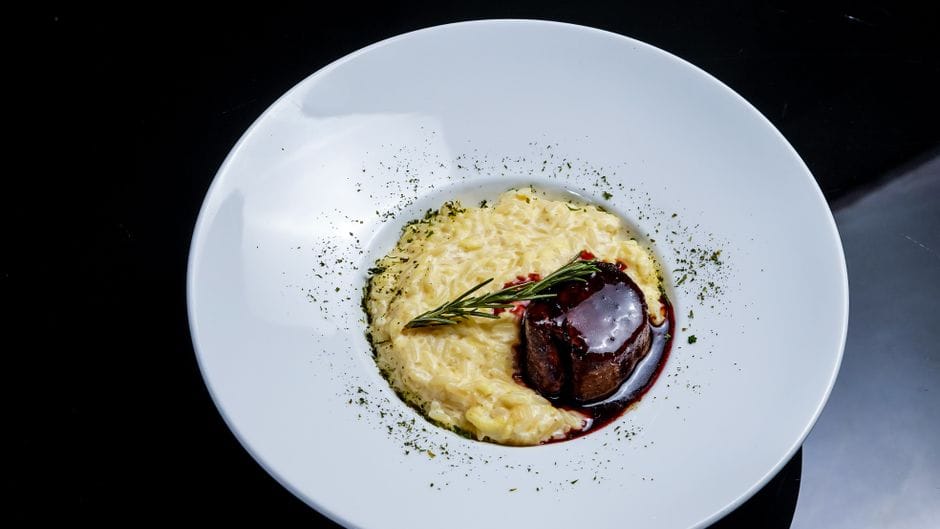
Risotto has a reputation as a high-stress dish that demands constant stirring and total attention. It is more forgiving than that. You do need to be present, but you do not need to stir like your life depends on it. The creaminess comes from the rice itself, coaxed out slowly.
Use the right rice
You need a short, starchy rice like Arborio or Carnaroli. As it cooks, it releases starch that thickens the liquid into that signature silky sauce. Long-grain rice will not do it. There is no substitute here.
The basic rhythm
- Soften onion in butter, then add the rice and toast it for a minute until the edges turn translucent.
- Add a splash of wine and let it cook off.
- Add warm stock a ladle at a time, stirring often, waiting until each addition is mostly absorbed before the next.
Finish it loose
Keep your stock warm in a separate pot so it does not shock the rice cold. After about eighteen minutes the rice should be tender with a slight bite. Pull it off the heat while it is still loose and saucy, then beat in cold butter and grated parmesan. It firms up as it sits, so a risotto that looks perfect in the pan will be stiff on the plate. It should slump, not stand.