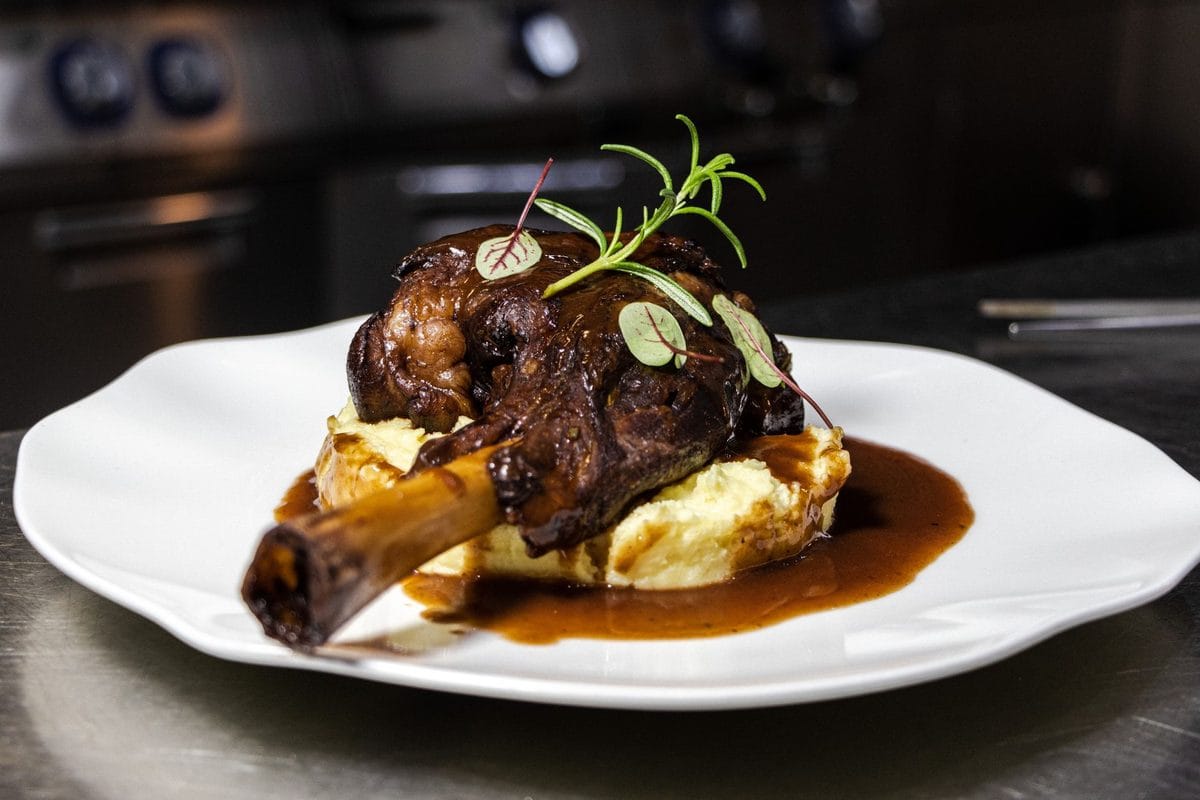
Lamb shanks showed up at $8.99 a pound at the Saturday farmers market last weekend, right around the time the morning air finally dropped into the 50s. That's the signal worth paying attention to, more than any calendar date. Braising cuts get cheap and good at the same moment every year, once grillers lose interest and butchers start moving fore shanks and cross-cut osso buco to the front of the case. If you've spent all summer building bark on a smoker, this is the week to put it away for a few hours and let a Dutch oven do the work instead.
Why Lamb Shanks Earn Their Keep This Time of Year
A lamb shank is mostly connective tissue and bone, wrapped around a modest amount of meat, which is exactly why it's cheap and exactly why it rewards patience. Cook it fast and it's chewy in a way that no amount of seasoning fixes. Cook it low for three to four hours and the collagen breaks down into gelatin, the meat pulls straight off the bone, and the braising liquid turns silky without a single spoonful of cornstarch. That's the same chemistry that makes a pork butt worth twelve hours on a smoker — you're just using a covered pot and an oven instead of wood and airflow.
Fore shanks (the front leg) run smaller and meatier than hind shanks, and most grocery butchers only stock fore shanks unless you special-order. A 12- to 14-ounce fore shank is one generous portion; hind shanks can run closer to 20 ounces and are better split between two people. Either works here. What matters more is asking whether the shank has been cross-cut (sliced into 1.5-inch rounds, the way osso buco is sold) or left whole — for this braise, whole is better, because whole shanks hold their shape through a four-hour cook and cross-cut pieces tend to fall apart before the sauce is ready.
What You'll Need
- 4 whole lamb shanks, about 12-14 oz each (roughly 3.5 lbs total)
- Kosher salt and coarse black pepper
- 3 tablespoons olive oil, divided
- 1 large yellow onion, diced
- 3 medium carrots, cut into 2-inch chunks
- 2 celery ribs, sliced thick
- 4 garlic cloves, smashed
- 2 tablespoons tomato paste
- 1 bottle (750ml) dry red wine — a Côtes du Rhône or a mid-shelf Chianti at $12-15 does the job; you don't need anything you wouldn't also drink
- 2 cups beef or chicken stock (Swanson or homemade, either is fine here)
- 2 bay leaves, 4 sprigs fresh thyme, 1 sprig rosemary
- 1 lb parsnips, peeled and cut into 2-inch pieces
- 1 small celery root (celeriac), peeled and cubed — turnips work as a substitute, though they turn softer faster and need less time in the pot
Building the Braise
Sear first. Every time.
Pat the shanks dry, season heavily with salt and pepper, and brown them in two tablespoons of hot oil over medium-high heat, about 4 minutes per side, until the surface is deeply colored and slightly crusted. Do this in batches if your pot is crowded — steaming instead of searing is the single most common reason a braise comes out with a flat, one-note sauce instead of something deep and savory. Pull the shanks out and set them aside on a plate.
Lower the heat to medium, add the last tablespoon of oil, and cook the onion, carrots, and celery for about 8 minutes, until the onion turns translucent and starts to pick up a little color at the edges. Stir in the garlic and tomato paste and cook for another minute — just enough to take the raw edge off the tomato paste without scorching the garlic. Pour in the wine, scrape up every browned bit stuck to the bottom of the pot, and let it simmer hard for 5 to 6 minutes until it's reduced by about a third. This step alone is where most of the sauce's backbone comes from, so don't rush past it because the recipe "just needs the wine in there."
Nestle the shanks back into the pot, pour in the stock until the liquid comes about two-thirds of the way up the sides of the meat (add water if it's short), and tuck in the bay leaves, thyme, and rosemary. Bring it to a bare simmer on the stovetop, then cover and move it to a 300°F oven. Three hundred degrees is slower than most published lamb shank recipes call for — a lot of them push 325°F to shave off thirty minutes — but the lower, steadier heat gives you meat that shreds with a fork instead of meat that's merely tender. If you're used to thinking in smoker terms, 300°F for four hours on a lamb shank isn't far off from 225°F for twelve hours on a brisket. Same principle, smaller cut.
When to Add the Root Vegetables
This is the part most recipes get wrong: they toss the parsnips and celery root in at the start, alongside the aromatics, and by hour three those vegetables have disintegrated into the sauce. Add the parsnips and celery root during the last 60 to 75 minutes of cooking instead. They'll still soften completely and soak up plenty of the braising liquid, but they'll hold enough structure to serve as actual vegetables on the plate rather than sauce filler. Check the pot around the 3-hour mark; if the liquid has reduced past the point of covering the shanks, add a splash of stock or water before the vegetables go in.
The shanks are done when the meat pulls away from the bone with light pressure from a fork — usually 3.5 to 4 hours total, depending on shank size and how tightly your Dutch oven's lid seals. Pull the pot from the oven, lift the shanks and vegetables onto a platter, and skim the fat off the surface of the remaining liquid (a wide spoon works better than a fat separator for a pot this size). Simmer the sauce on the stovetop for 8 to 10 minutes to concentrate it further, taste, and adjust the salt — braising liquid almost always needs more salt at the end than you'd expect, because so much of it clung to the meat and vegetables you already pulled out.
Serving It
Serve the shanks over something that can absorb the sauce — soft polenta, mashed potatoes, or wide egg noodles all work, and a $6 tube of polenta from the grocery store's Italian aisle is genuinely fine here, not a compromise. A gremolata made from lemon zest, chopped parsley, and one minced garlic clove, scattered over the top right before serving, cuts through the richness in a way the dish needs. Skip the mint jelly that shows up next to lamb at every diner — it fights with the wine and rosemary instead of complementing them, and honestly it belongs on roast leg of lamb, not a wine-braised shank.
One thing worth admitting up front: this dish doesn't photograph the way a rack of smoked ribs does. The sauce is dark, the meat falls apart rather than slicing into neat portions, and there's no bark to show off. What it has instead is a depth of flavor that develops specifically because nothing about it was rushed — four hours of low heat does something to lamb and root vegetables that no amount of technique can shortcut. If you're cooking for people who eat with their phones out, this isn't the dish. If you're cooking for people who'll ask for the recipe halfway through the meal, it is.
Make-Ahead and Storage
Braised lamb shanks are better the next day, which makes this one of the few dishes worth actively cooking ahead. Refrigerate the shanks in their sauce for up to 4 days, or freeze in a sealed container for up to 3 months — the sauce actually thickens slightly and the flavors round out as it sits. Reheat gently, covered, in a 325°F oven for about 30 minutes, or in a covered pot on the stovetop over low heat, stirring occasionally so the bottom doesn't scorch. Avoid the microwave for this one; it heats the sauce unevenly and tends to dry out the exposed edges of the meat before the center is even warm.
Leftover sauce, once the shanks are gone, is worth keeping on its own. Strain it, freeze it in a small container, and use it the next time you're braising short ribs or making a pan sauce for pork chops — it's already reduced, already seasoned, and carries the rosemary and wine flavor that took four hours to build the first time around.